 Tweet
Tweet
To: Hochraat der Germania
From: Charles I
Date: June 1 1558
To Englands fine friend and ally. We have been through tough times together and now, along with our other ally of the NSEW Alliance, Ollanta Humala, we find ourselves reaping the rewards of our hard labours.
Peace on Terra has yielded much riches and resources for all.
Given that, the English Parliament is a little alarmed by the Germans agitation of the Spanish. I believe at the heart of the matter is Germany's need for coal.
We well understand that and suggest that you negotiate for coal resources at the Moscow Summit, without the need for aggression. Spain has abundant coal. If England had spare coal we would gladly offer it; but we assure you that Oil will be available from England.
If Spain refuses to trade coal we support your right of access to that resource. However we need a map of the vicinity of the conflict first.
Thanking you,
Charles I of England and the NSEW Alliance
From: Charles I
Date: June 1 1558
To Englands fine friend and ally. We have been through tough times together and now, along with our other ally of the NSEW Alliance, Ollanta Humala, we find ourselves reaping the rewards of our hard labours.
Peace on Terra has yielded much riches and resources for all.
Given that, the English Parliament is a little alarmed by the Germans agitation of the Spanish. I believe at the heart of the matter is Germany's need for coal.
We well understand that and suggest that you negotiate for coal resources at the Moscow Summit, without the need for aggression. Spain has abundant coal. If England had spare coal we would gladly offer it; but we assure you that Oil will be available from England.
If Spain refuses to trade coal we support your right of access to that resource. However we need a map of the vicinity of the conflict first.
Thanking you,
Charles I of England and the NSEW Alliance


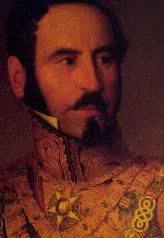 After General Espartero told Emperor Carlos VII about the affair between Empress Eugenia de Barcelona and Prime Minister Manuel de Godoy, Carlos VII decided he couldn't stand the shame and abdicated the throne secretly in the city of Barcelona at the Kremlin (a gift given by Czar Nicholas II to Spain), his younger son Ferdinand II was promptly named Emperor.
 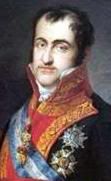 General Espartero had recently gained the Emperor's trust after telling him of de Godoy's affair and proving (with some falsified, but mostly accurate evidence) that de Godoy had been a Liberal spy implanted in the imperial court and was aiding in a multitude of Liberal activities including the rebellion in San Pedro. This of course was true, but it was not de Godoy who as the spy; it was Espartero who had blackmailed the Prime Minister, and promptly had him killed by imperial decree following the affair in order to silence him. These facts gave Ferdinand II reason to name General Espartero as the new Prime Minister. With his new position as Prime Minister, he worked quickly to control the new government, as well as the Union Liberal...
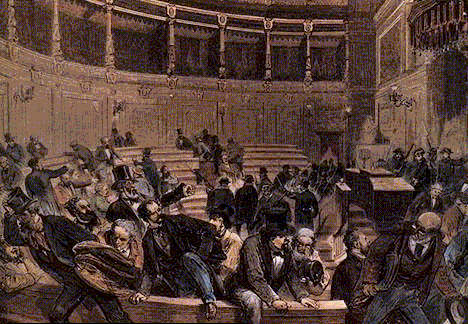 With his new official status as Prime Minister, General Espartero realized that in order to achieve the goals of the Union Liberal he had to do two things; (1) Increase the power of his own office, and (2) gain full control over the Union Liberal. His first order of business would be to establish his own party's control over the Union by staging a mock "dissolution," thereby removing certain factions within the Union that were not partial to his own ideology (namely Marxists, Anarchists and Fascists). He staged the whole thing perfectly, galliantly marching into a secret meeting with imperial forces and quickly arresting problem members. In this way his faction had full control over the group, and Espartero controlled both the imperial authorities and the resistance movements that challenged the government. Things were duly in his hands, and he had only one more things to accomplish; completely eradicating the imperial family...
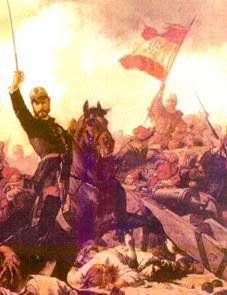 The Carlist forces were commanded, ironically by another Carlos, Carlos VI who was head of the military under Felipe II. The Imperial forces, who would later turn out to be Liberal soldiers, were commanded by General Espartero and met at Madrid in 1560. Ferdinand's soldiers routed the armies of Carlos VI, resulting in the death of the latter and the victory of the former. But it was far too late, the forces of General Juan Prim captured the Emperor and claimed that they had staged the entire incident to grant more power to the imperial family and thus deny the natural rights of Spanish citizens. War quickly broke out accross Spain, resulting in the fall of the Viceroy of New Spain, and the assassination of Viceroy Alfonso of Toledo. In the chaos that ensued the Prime Minister gained full power, and called a halt to the hostilities, demanding a meeting of Spanish leaders and the exile of the imperial family to Russia for their crimes. The plan was perfectly orchestrated, and despite the death of Simon Bolivar, the revolution was fully complete. General Espartero established the Liberal Junta, an oligarchy of members of the Union Liberal who would rule Spain in the stead of the imperial family. The line of Isabella had lost their control of Spain after centuries of prosperity.
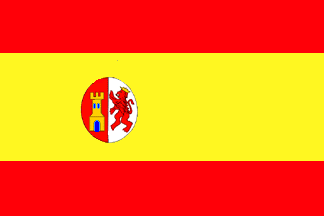

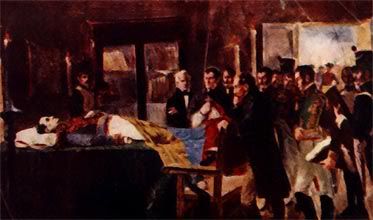 Following the successful rebellion against the imperial family of Spain during the Carlist Wars (named so after Carlos VIII, who claimed the throne of Spain from Ferdinand III) Spain went through extraordinary changes. The first being the recognition of a new democratic government controlled by the Liberal Junta of General Baldomero Espartero. His regime came to power through a combination of politics, military cunning, propoganda, and finally pure ambition. One grave loss occured though; the death of Generalisimo Simon Bolivar, seen as many as the true father of Spanish Liberalism, he fell at the victorious battle of San Pedro. Bolivar never quite got to see his ideals come to fruition, but in his honor New Spain was renamed 'Bolivia' and became an official province of the new democratic government. The following is a description of the new government and the first actions took by the ruling Junta.
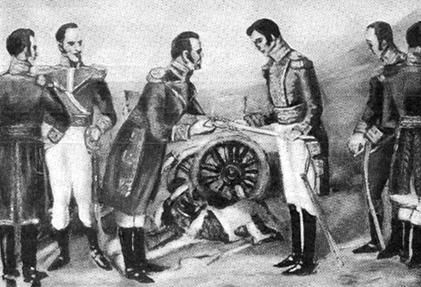 Following the final victory of Liberal forces against the imperial armies, Prime Minister Espartero determined it would be wise to exile the royals to Russia, where they would at least be safe from reprisals. He understood that while it would be horrendous to execute them (mainly out of fear of repeating the Indian "reign of terror") leaving them in Spain even as figurehead monarchs would only give them a thirst for power. They have, after all, ruled unquestioned since Carlos V. He made arrangements to have the remaining members of the imperial family sent to Russia, where they would be under the care of Czar Nicholas II (himself half Spanish). It was during this time that the status of Captain William Manning, an English exile in his own right, was called into question. He realized that if they turned Manning over the Russia, they ran the risk of his execution as bad blood flowed through Russia, Manning was the man who sacked Novogrod after all. It was decided that Manning would remain in the Junta's custody until diplomatic relations were established with England. With the imperial family delivered to Russia, the Junta was now free to form their government.
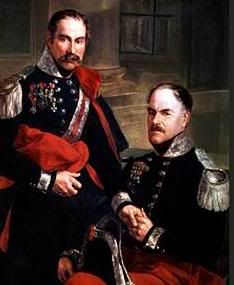 The main leaders of the Junta were, initially, Simon Bolivar, General Espartero, and General Francisco Serrano y Dominguez (a close confidant of Espartero). With the demise of Bolivar Espartero and Serrano were the unquestioned leaders of the Liberal movement, and understood that handling such a large and diverse Empire could spell problems. Their first order of business was to convene a constitutional convention which would appoint various people to various offices, already Espartero managed (while the Prime Minister of Emperor Ferdinand III) to arrest any members of the Union Liberal who did not tow the line, so it proved quite easy to gain the support of the remaining members and establish a constitutional convention quickly and without much dissent. Many offices deemed "necessary" to running Spain during the interim government were appointed, and not coincidentally these offices were very powerful; they included the Prime Minister (known in Spain as Presidente del Gobierno, but internationally as Prime Minister), Minister of National Defense, Minister of the Interior, and finally the Foreign Minister. In a very real way these positions would become concrete and powerful, and none of the men appointed would lose their roles during their lifetimes, but more on that later.
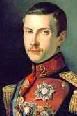 Jose Diaz was the right-hand man of Simon Bolivar and got his start as the son of a farmer in the city of Barcelona. After the industrial revolution began to sweep accross Terra, Jose's father found it difficult to compete with wealthy factory owners who wanted his land. When imperial decrees took land from his father in order to build more imperial arms (such as frigates, ironclads, cannons, etc.) the family moved to San Pedro to find a new life. Unfortunately fate would deal them a terrible hand when the response of Governor Colon to liberal uprisings in the area drove him to Bolivar's camp. Jose is an ardent liberal that borders on Marxism from time to time, he is an avid supporter of worker's rights and believes that the good of the citizens is the main purpose of government. On a side note, Diaz is often the brunt of many anti-imperial jokes, as he shares the same surname is the imperial family. He is the Interior Minister of the Spanish Republic.
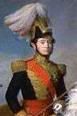 General Juan Prim y Prats is a young idealist who has taken to General Espartero like a father figure. He was key to utilizing the information gained from blackmailing Prime Minister de Godoy early in the insurrection, and continued as an important military figure during the Carlist Wars. His ideological origins are unclear, as he was well-educated by a father who held high rank in the imperial authority, working directly with Foreign Minister Alfonso Guzman de Olivares. What is clear, however, is his loyalty to Espartero, and his belief that in a democracy Spain will become unstoppable. He serves as the Minister of Defense, and is in charge of commanding the armies of the Republic.
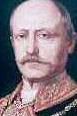 Francisco Serrano y Dominguez is the chief advisor to Prime Minsiter Espartero, and serves as his foreign minister. He has little to no actual experience in international diplomacy, but is known as one of the most charismatic members of the Republican movement. He has authored many leaflets, and was generally responsible for every iota of Liberal propoganda in Spain. It will be interesting to see how Serrano handles upcoming diplomatic issues such as the "Zaragoza incident" where Germany claimed Spanish ships fired upon their own, and German settlers illegally established the colony of Bremen in Indian and Spanish territorial claims.
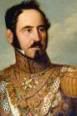 Prime Minsiter Baldomero Espartero is the mastermind of the de Goy affair, the dissolution of the Union Liberal, the Carlist War, and eventually the final insurrection. He established a new Liberal Junta that was favorable to his own ideologies, those of free trade, technological cooperation, and the ideals of a social contract. Some have accused him of taking a harsh role, exchanging a powerful imperial authority with what has been to this point a military junta. Espartero promises to create an official democracy in Spain but notes that it takes time and work to establish this, especially in the face of mounting aggression from Germany and the potential for yet another attempt to restore the imperial family to the throne. He has taken it upon himself to recreate Spanish foreign policy, and establish a powerful yet free Spanish Republic.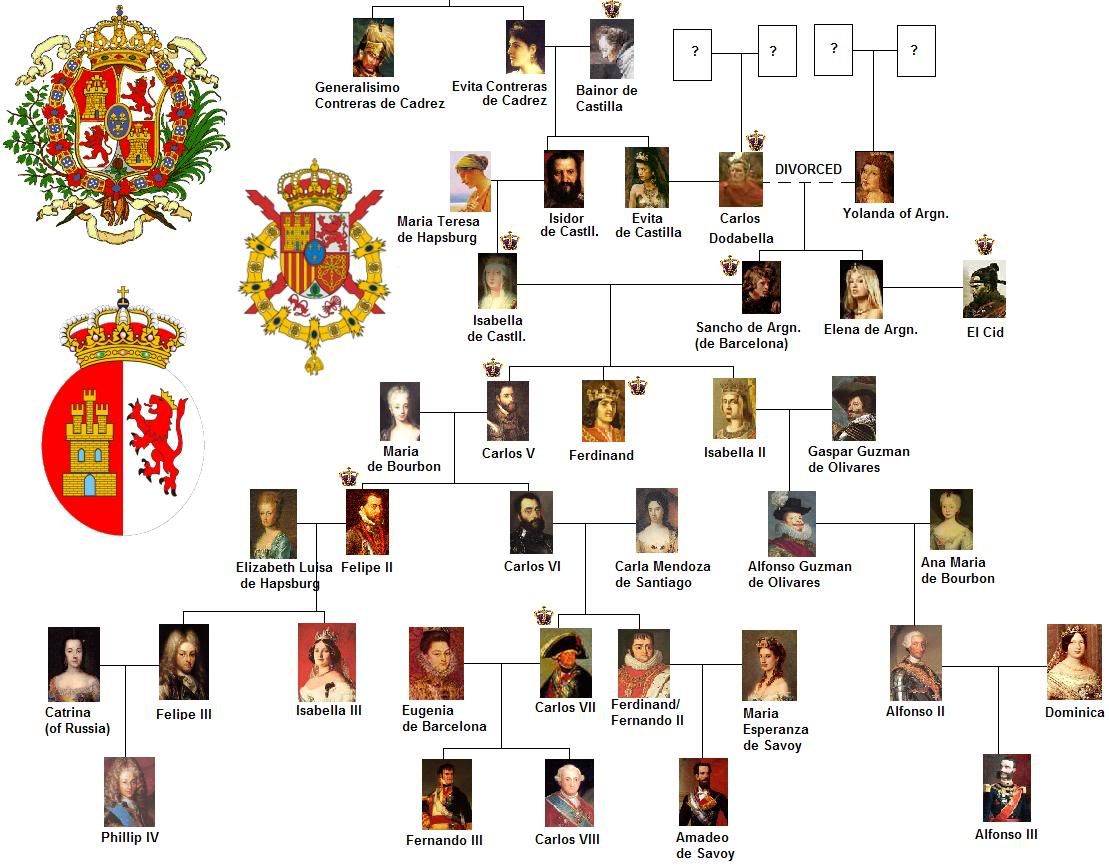
Comment