
 Tweet
Tweet
The Condemnation and Excommunication of Martin Luther, the Heretic, and his Followers, December 1341.
Through the power given him from God, the Russian Pontiff has been appointed to administer spiritual and temporal punishments as each case severally deserves. The purpose of this is the repression of the wicked designs of misguided men, who have been so captivated by the debased impulse of their evil purposes as to forget the fear of the Lord, to set aside with contempt canonical decrees and apostolic commandments, and to dare to formulate new and false dogmas and to introduce the evil of schism into the Church of God--or to support, help and adhere to such schismatics, who make it their business to cleave asunder the seamless robe of our Redeemer and the unity of the orthodox faith. Hence it befits the Pontiff, lest the vessel of Peter appear to sail without pilot or oarsman, to take severe measures against such men and their followers, and by multiplying punitive measures and by other suitable remedies to see to it that these same overbearing men, devoted as they are to purposes of evil, along with their adherents, should not deceive the multitude of the simple by their lies and their deceitful devices, nor drag them along to share their own error and ruination, contaminating them with what amounts to a contagious disease. It also befits the Pontiff, having condemned the schismatics, to ensure their still greater confounding by publicly showing and openly declaring to all faithful Christians how formidable are the censures and punishments to which such guilt can lead; to the end that by such public declaration they themselves may return, in confusion and remorse, to their true selves, making an unqualified withdrawal from the prohibited conversation, fellowship and (above all) obedience to such accursed excommunicates; by this means they may escape divine vengeance and any degree of participation in their damnation.
We have been informed that after this previous missive had been exhibited in public and the interval or intervals it prescribed had elapsed (60 days) -- and we hereby give solemn notice to all faithful Christians that these intervals have and are elapsed -- many of those who had followed the errors of Martin took cognisance of our missive and its warnings and injunctions; the spirit of a saner counsel brought them back to themselves, they confessed their errors and abjured the heresy at our instance, and by returning to the true Catholic faith obtained the blessing of absolution with which the self-same messengers had been empowered; and in several states and localities of the said Germany the books and writings of the said Martin were publicly burned, as we had enjoined.
Nevertheless Martin himself -- and it gives us grievous sorrow and perplexity to say this -- the slave of a depraved mind, has scorned to revoke his errors within the prescribed interval and to send us word of such revocation, or to come to us himself; nay, like a stone of stumbling, he has feared not to write and preach worse things than before against us and this Holy See and the Catholic faith, and to lead others on to do the same.
He has now been declared a heretic; and so also others, whatever their authority and rank, who have cared nought of their own salvation but publicly and in all men's eyes become followers of Martin's pernicious and heretical sect, and given him openly and publicly their help, counsel and favour, encouraging him in their midst in his disobedience and obstinacy, or hindering the publication of our said missive: such men have incurred the punishments set out in that missive, and are to be treated rightfully as heretics and avoided by all faithful Christians, as the Apostle says (Titus iii. 10-11).
Our purpose is that such men should rightfully be ranked with Martin and other accursed heretics and excommunicates, and that even as they have ranged themselves with the obstinacy in sinning of the said Martin, they shall likewise share his punishments and his name, by bearing with them everywhere the title "Lutheran" and the punishments it incurs.
Our previous instructions were so clear and so effectively publicised and we shall adhere so strictly to our present decrees and declarations, that they will lack no proof, warning or citation.
Our decrees which follow are passed against Martin and others who follow him in the obstinacy of his depraved and damnable purpose, as also against those who defend and protect him with a military bodyguard, and do not fear to support him with their own resources or in any other way, and have and do presume to offer and afford help, counsel and favour toward him. All their names, surnames and rank -- however lofty and dazzling their dignity may be -- we wish to be taken as included in these decrees with the same effect as if they were individually listed and could be so listed in their publication, which must be furthered with an energy to match their contents.
On all these we decree the sentences of excommunication, of anathema, of our perpetual condemnation and interdict; of privation of dignities, honours and property on them and their descendants, and of declared unfitness for such possessions; of the confiscation of their goods and of the crime of treason; and these and the other sentences, censures and punishments which are inflicted by canon law on heretics and are set out in our aforesaid missive, we decree to have fallen on all these men to their damnation.
We add to our present declaration, by our Apostolic authority, that states, territories, camps, towns and places in which these men have temporarily lived or chanced to visit, along with their possessions -- cities which house cathedrals and metropolitans, monasteries and other religious and sacred places, privileged or unprivileged -- one and all are placed under our ecclesiastical interdict, while this interdict lasts, no pretext of Apostolic Indulgence (except in cases the law allows, and even there, as it were, with the doors shut and those under excommunication and interdict excluded) shall avail to allow the celebration of mass and the other divine offices. We prescribe and enjoin that the men in question are everywhere to be denounced publicly as excommunicated, accursed, condemned, interdicted, deprived of possessions and incapable of owning them. They are to be strictly shunned by all faithful Christians.
We would make known to all the small store that Martin, his followers and the other rebels have set on God and his Church by their obstinate and shameless temerity. We would protect the herd from one infectious animal, lest its infection spread to the healthy ones. Hence we lay the following injunction on each and every patriarch, archbishop, bishop, on the prelates of patriarchal, metropolitan, cathedral and collegiate churches, and on the religious of every Order -- even the mendicants -- privileged or unprivileged, wherever they may be stationed: that in the strength of their vow of obedience and on pain of the sentence of excommunication, they shall, if so required in the execution of these presents, publicly announce and cause to be announced by others in their churches, that this same Martin and the rest are excommunicate, accursed, condemned, heretics, hardened, interdicted, deprived of possessions and incapable of owning them, and so listed in the enforcement of these presents. Three days will be given: we pronounce canonical warning and allow one day's notice on the first, another on the second, but on the third peremptory and final execution of our order. This shall take place on a Sunday or some other festival, when a large congregation assembles for worship. The banner of the cross shall be raised, the bells rung, the candles lit and after a time extinguished, cast on the ground and trampled under foot, and the stones shall be cast forth three times, and the other ceremonies observed which are usual in such cases. The faithful Christians, one and all, shall be enjoined strictly to shun these men.
We would occasion still greater confounding on the said Martin and the other heretics we have mentioned, and on their adherents, followers and partisans: hence, on the strength of their vow of obedience we enjoin each and every patriarch, archbishop and all other prelates, that even as they were appointed on the authority of Jerome to allay schisms, so now in the present crisis, as their office obliges them, they shall make themselves a wall of defence for their Christian people. They shall not keep silence like dumb dogs that cannot bark, but incessantly cry and lift up their voice, preaching and causing to be preached the word of God and the truth of the Catholic faith against the damnable articles and heretics aforesaid.
To each and every rector of the parish churches, to the rectors of all the Orders, even the mendicants, privileged or unprivileged, we enjoin in the same terms, on the strength of their vow of obedience, that appointed by the Lord as they are to be like clouds, they shall sprinkle spiritual showers on the people of God, and have no fear in giving the widest publicity to the condemnation of the aforesaid articles, as their office obliges them. It is written that perfect love casteth out fear. Let each and every one of you take up the burden of such a meritorious duty with complete devotion; show yourselves so punctilious in its execution, so zealous and eager in word and deed, that from your labours, by the favour of divine grace, the hoped-for harvest will come in, and that through your devotion you will not only earn that crown of glory which is the due recompense of all who promote religious causes, but also attain from us and the said Holy See the unbounded commendation that your proved diligence will deserve.
No obstacle is afforded to our wishes by the Apostolic constitutions and orders, or by anything in our aforesaid earlier missive which we do not wish to stand in the way, or by any other pronouncements to the contrary.
No one whatsoever may infringe this our written decision, declaration, precept, injunction, assignation, will, decree; or rashly contravene it. Should anyone dare to attempt such a thing, let him know that he will incur the wrath of Almighty God and of the blessed Apostles Peter and Paul.
Pope John III
Written at the Hagia Sophia, Moscow, on the 3rd December 1341, during the twentieth year of our pontificate.
Through the power given him from God, the Russian Pontiff has been appointed to administer spiritual and temporal punishments as each case severally deserves. The purpose of this is the repression of the wicked designs of misguided men, who have been so captivated by the debased impulse of their evil purposes as to forget the fear of the Lord, to set aside with contempt canonical decrees and apostolic commandments, and to dare to formulate new and false dogmas and to introduce the evil of schism into the Church of God--or to support, help and adhere to such schismatics, who make it their business to cleave asunder the seamless robe of our Redeemer and the unity of the orthodox faith. Hence it befits the Pontiff, lest the vessel of Peter appear to sail without pilot or oarsman, to take severe measures against such men and their followers, and by multiplying punitive measures and by other suitable remedies to see to it that these same overbearing men, devoted as they are to purposes of evil, along with their adherents, should not deceive the multitude of the simple by their lies and their deceitful devices, nor drag them along to share their own error and ruination, contaminating them with what amounts to a contagious disease. It also befits the Pontiff, having condemned the schismatics, to ensure their still greater confounding by publicly showing and openly declaring to all faithful Christians how formidable are the censures and punishments to which such guilt can lead; to the end that by such public declaration they themselves may return, in confusion and remorse, to their true selves, making an unqualified withdrawal from the prohibited conversation, fellowship and (above all) obedience to such accursed excommunicates; by this means they may escape divine vengeance and any degree of participation in their damnation.
We have been informed that after this previous missive had been exhibited in public and the interval or intervals it prescribed had elapsed (60 days) -- and we hereby give solemn notice to all faithful Christians that these intervals have and are elapsed -- many of those who had followed the errors of Martin took cognisance of our missive and its warnings and injunctions; the spirit of a saner counsel brought them back to themselves, they confessed their errors and abjured the heresy at our instance, and by returning to the true Catholic faith obtained the blessing of absolution with which the self-same messengers had been empowered; and in several states and localities of the said Germany the books and writings of the said Martin were publicly burned, as we had enjoined.
Nevertheless Martin himself -- and it gives us grievous sorrow and perplexity to say this -- the slave of a depraved mind, has scorned to revoke his errors within the prescribed interval and to send us word of such revocation, or to come to us himself; nay, like a stone of stumbling, he has feared not to write and preach worse things than before against us and this Holy See and the Catholic faith, and to lead others on to do the same.
He has now been declared a heretic; and so also others, whatever their authority and rank, who have cared nought of their own salvation but publicly and in all men's eyes become followers of Martin's pernicious and heretical sect, and given him openly and publicly their help, counsel and favour, encouraging him in their midst in his disobedience and obstinacy, or hindering the publication of our said missive: such men have incurred the punishments set out in that missive, and are to be treated rightfully as heretics and avoided by all faithful Christians, as the Apostle says (Titus iii. 10-11).
Our purpose is that such men should rightfully be ranked with Martin and other accursed heretics and excommunicates, and that even as they have ranged themselves with the obstinacy in sinning of the said Martin, they shall likewise share his punishments and his name, by bearing with them everywhere the title "Lutheran" and the punishments it incurs.
Our previous instructions were so clear and so effectively publicised and we shall adhere so strictly to our present decrees and declarations, that they will lack no proof, warning or citation.
Our decrees which follow are passed against Martin and others who follow him in the obstinacy of his depraved and damnable purpose, as also against those who defend and protect him with a military bodyguard, and do not fear to support him with their own resources or in any other way, and have and do presume to offer and afford help, counsel and favour toward him. All their names, surnames and rank -- however lofty and dazzling their dignity may be -- we wish to be taken as included in these decrees with the same effect as if they were individually listed and could be so listed in their publication, which must be furthered with an energy to match their contents.
On all these we decree the sentences of excommunication, of anathema, of our perpetual condemnation and interdict; of privation of dignities, honours and property on them and their descendants, and of declared unfitness for such possessions; of the confiscation of their goods and of the crime of treason; and these and the other sentences, censures and punishments which are inflicted by canon law on heretics and are set out in our aforesaid missive, we decree to have fallen on all these men to their damnation.
We add to our present declaration, by our Apostolic authority, that states, territories, camps, towns and places in which these men have temporarily lived or chanced to visit, along with their possessions -- cities which house cathedrals and metropolitans, monasteries and other religious and sacred places, privileged or unprivileged -- one and all are placed under our ecclesiastical interdict, while this interdict lasts, no pretext of Apostolic Indulgence (except in cases the law allows, and even there, as it were, with the doors shut and those under excommunication and interdict excluded) shall avail to allow the celebration of mass and the other divine offices. We prescribe and enjoin that the men in question are everywhere to be denounced publicly as excommunicated, accursed, condemned, interdicted, deprived of possessions and incapable of owning them. They are to be strictly shunned by all faithful Christians.
We would make known to all the small store that Martin, his followers and the other rebels have set on God and his Church by their obstinate and shameless temerity. We would protect the herd from one infectious animal, lest its infection spread to the healthy ones. Hence we lay the following injunction on each and every patriarch, archbishop, bishop, on the prelates of patriarchal, metropolitan, cathedral and collegiate churches, and on the religious of every Order -- even the mendicants -- privileged or unprivileged, wherever they may be stationed: that in the strength of their vow of obedience and on pain of the sentence of excommunication, they shall, if so required in the execution of these presents, publicly announce and cause to be announced by others in their churches, that this same Martin and the rest are excommunicate, accursed, condemned, heretics, hardened, interdicted, deprived of possessions and incapable of owning them, and so listed in the enforcement of these presents. Three days will be given: we pronounce canonical warning and allow one day's notice on the first, another on the second, but on the third peremptory and final execution of our order. This shall take place on a Sunday or some other festival, when a large congregation assembles for worship. The banner of the cross shall be raised, the bells rung, the candles lit and after a time extinguished, cast on the ground and trampled under foot, and the stones shall be cast forth three times, and the other ceremonies observed which are usual in such cases. The faithful Christians, one and all, shall be enjoined strictly to shun these men.
We would occasion still greater confounding on the said Martin and the other heretics we have mentioned, and on their adherents, followers and partisans: hence, on the strength of their vow of obedience we enjoin each and every patriarch, archbishop and all other prelates, that even as they were appointed on the authority of Jerome to allay schisms, so now in the present crisis, as their office obliges them, they shall make themselves a wall of defence for their Christian people. They shall not keep silence like dumb dogs that cannot bark, but incessantly cry and lift up their voice, preaching and causing to be preached the word of God and the truth of the Catholic faith against the damnable articles and heretics aforesaid.
To each and every rector of the parish churches, to the rectors of all the Orders, even the mendicants, privileged or unprivileged, we enjoin in the same terms, on the strength of their vow of obedience, that appointed by the Lord as they are to be like clouds, they shall sprinkle spiritual showers on the people of God, and have no fear in giving the widest publicity to the condemnation of the aforesaid articles, as their office obliges them. It is written that perfect love casteth out fear. Let each and every one of you take up the burden of such a meritorious duty with complete devotion; show yourselves so punctilious in its execution, so zealous and eager in word and deed, that from your labours, by the favour of divine grace, the hoped-for harvest will come in, and that through your devotion you will not only earn that crown of glory which is the due recompense of all who promote religious causes, but also attain from us and the said Holy See the unbounded commendation that your proved diligence will deserve.
No obstacle is afforded to our wishes by the Apostolic constitutions and orders, or by anything in our aforesaid earlier missive which we do not wish to stand in the way, or by any other pronouncements to the contrary.
No one whatsoever may infringe this our written decision, declaration, precept, injunction, assignation, will, decree; or rashly contravene it. Should anyone dare to attempt such a thing, let him know that he will incur the wrath of Almighty God and of the blessed Apostles Peter and Paul.
Pope John III
Written at the Hagia Sophia, Moscow, on the 3rd December 1341, during the twentieth year of our pontificate.
 But every action has a reaction. From 1340 to 1342, a German theologian by the name of Martin Luther published a series of pamplets criticizing the Catholic Church, cumulinating in the 95 Theses that he and his followers nailed to the doors of every church in Russia. This was made easy by the invention of the printing press 5 years earlier in the Imperial Academy. The Holy See, outraged, officially excommunicated Luther in the winter of 1341; this was followed, 4 months later, by the setting up of a Holy Office, and the subsequent launch of the Inquisition in both Russia and Spain. In Russia, Peter was very much supportive of the Church's stance, and imperial agents were often seen escorting Inquisition officials as they went about their business. Perhaps it was not a coincidence that many who had been critical of Peter and his policies found themselves branded as heretics, and punished. The punishments ranged from 'mere' exile to burning at the stake and curxification. Luther himself fled Russia ahead of the Inquisition officials and returned to Germany, where he wasted no time in publishing and popularizing his pamplets among the faithful there.
 In the winter of 1350, Peter began having problems with his urinary tract and bladder. When these problems reoccurred in the summer of 1352, a team of doctors performed surgery. The following November, while on a visit along the Northern Coast, Peter saw a group of soldiers drowning near Feodorgrad and assisted in their rescue. The cold water rescue exacerbated Peter's bladder problems and caused his death on January 28, 1353.
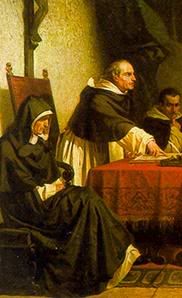 Juan Paul III responded quickly, and told Hermann that he would indeed send missionaries to German cities, despite the potential of Spain's involvement in the war. He knew the Emperor's intent to send troops, and potentially aide in the attack on America IF American or German soldiers harmed Russian soldiers, and planned to send his missionaries in secret among the Spanish armies stationed in Delhi. He wrote back to Hermann, ensuring him that the men would be there, and even reported that Spanish forces were already present in the area. This alarmed Spanish Foreign Minister Pedro Abarca de Bolea, who quickly informed the Emperor. Carlos moved quickly to condemn Juan Paul III, however the Pope felt that execution would be too severe, so Juan Paul III was exiled to the New World and excommunicated. The plan to send missionaries, however, was already under way and the Emperor could do little to stop the priests from traveling to Berlin.
 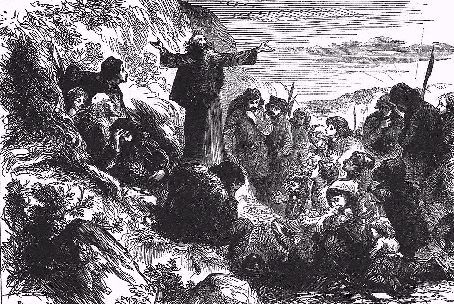 Unbeknownst to the General, these soldiers were missionaries in hiding, who had orders from Archbishop Juan Pedro III and Pope Paul VI to spread Christianity to Germany, and where better to start than Berlin? Hermann the Staunch had made it clear in his letters to Juan Pedro III that the most important thing would be to gain the support of the German nobility, many of whom resided in Berlin. The plan was quite simple; they would spread the faith throughout the German mainland, and from there expect the Germans to spread it to Germany's various island holdings. These missionaries disguised as soldiers had an unexpected effect however - it changed the political feeling of the looming war, Spain was quickly charged with outright support for India, which caused m any nations on Terra to clamor for a peaceful resolution to the war. Certainly if Spain and Russia joined the conflict the Americans, French, and Germans would stand no chance and quickly went to the Northern Alliance for support. Lord Protector of England, Captain William Manning (who was commander of the English forces who took Novogrod during the Great World War) called for an international summit to attempt to reconcile the Indian possession of Boston with Germany and America's contention that Spain, China, Russia, and India were working together behind the scenes to continue their dominance of the continent. Unlike the summit in Moscow, the summit in London established peace accords that not only kept Boston under Indian control, but extended land grants to the Americans and Germans in the New World. Peace was reached, and now there was nothing stopping the Spanish mission in Berlin.
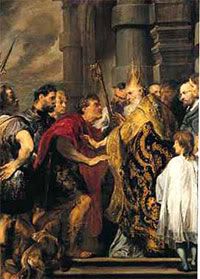 Before the summit in London, however, Spanish missionaries had already reached and established the Spanish Mission in Berlin, and despite much persecution from the Jewish population (many saw Spain as a force of imperialism, and believed the missionaries attempted to spy on Germany) the Spanish Mission became successful in establishing a small Christian community in Germany, they particularly took to Christ's teachings of love and respect for the poor and meek, as many Germans felt that nations such as India preyed upon their weaknesses. Unfortunately Spanish missionaries in Munich and Hamburg were not as lucky, as they were driven from the cities through violent means. Eventually Carlos V decided that he woul you that at least two whole groups of missionaries were killed in Germany, at least two. And from what I can tell the Spanish converted four cities down there, Munich, Berlin, Hamburg, and Paris. That means six groups were sent, and as far as we can tell Juan Pedro and the Pope were only responsible for one. What does this tell you? Quite simply the Emperor and the Czar removed Juan Pedro III and the Pope from power and installed their own favorable leaders, now THEY control the church. This is what Martin Luther wanted the world to know, and this is what the Church is working hard to prevent. Plain and simple Carlos saw a plan he liked, he stole it from Juan Pedro III and now he's sharing it with Czar Peter II. THAT is what is really going on.
 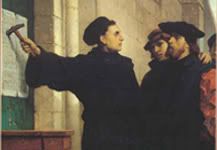 Martin Luther was a German-born Russian christian who had had enough of what he considered Imperial dominance of the Church. He cited the actions of both Emperor Carlos and Czar Peter as evidence that the faith was no longer controlled by the priests, but by the powerful northern Emperors. In his "95 thesis" he mentions secular control of the faith by these leaders, as well as the selling of religious favors to powerful Russian and Spanish dukes, and finally complaints about the fusion of old religions with christianity (Hinduism in Russia, and Buddhism in Spain) (even some German and American nobles were involved in the contraversey.) The recent invention of the printing press allowed his leaflets to spread throughout Russia, Germany, America and Spain creating chaos among the Catholic elites and an outcy by southern christians to break away from the official church in Yaroslav'l. For their part the northern Catholics presented counter-arguments to Luther's thesis, but the damage had already been done.
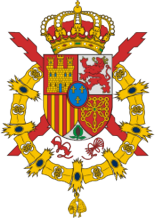
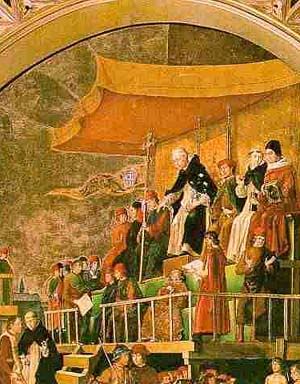 Emperor Carlos V was torn between two decisions; on one hand he had loyally served the Pope and the Czar, and on the other he had to reconcile a storied history of Spanish Buddhist principles (including those of the national hero El Cid) with the powerful Catholic Church. Not only this, but he held political ties with the Russians as well in the form of an official Defensive Pact. Therefore the decision to allow the inquisition to occur in Spain was one he would regret until his dying day. Despite this he quickly called upon Spanish priests and noblemen alike to ensure that Spanish protestants (which fortunately for him were not numerous) were hunted down and dealt with appropriately. This created a backlash from the Spanish Buddhist community, despite the fact that they were exempt in Spain from the inquisition, to stage protests including mass-meditations (which blocked important roads), paying for the passage of many protestants (both Spanish and Russian) to New Spain, and in some rare cases Buddhist monks would set themsleves on fire during some of the burnings. This lead to many, including powerful Buddhist dukes to call for the end of a violent inquisition in Spain; Carlos had no idea what to do in this situation as he was worried he would lose the support of Russia, we'll discuss his decision later.
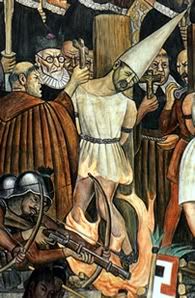 The Russian inquisition however was far more brutal, thousands and thousands of Russian Jews, Hindus, Protestants and foreigners were put to the rack and torch. Many intelligent and hard working Russians were fettered out this way, creating a situation similar to the Indian reign of terror (which saw the demise of great Indians like General Pusyamitra and Foreign Minister Chanakya). Such a strange twist of fate saw the nation who condemned the actions of their own ally the Indians acting in a more brutal fashion than those they condemned! The effect this would have would be two-fold; first it would create a wave of Russian immigration into Germany which resulted in a new society and in many ways a scientific revival, the second would be a general division of Germany as explained in the book "Religious Developments in Germany During the Middle Ages"... BLAH BLAH BLAH BLAH BLAH BLAH BLAH BLAH BLAH BLAH BLAH BLAH BLAH BLAH BLAH BLAH BLAH BLAH BLAH BLAH BLAH BLAH BLAH BLAH BLAH BLAH BLAH BLAH BLAH BLAH BLAH BLAH BLAH BLAH BLAH BLAH BLAH BLAH BLAH BLAH BLAH BLAH BLAH.



 The Indian Revolution led to a rebirth of Hindu tradition, religion and culture. Since Bharata Muni published the
 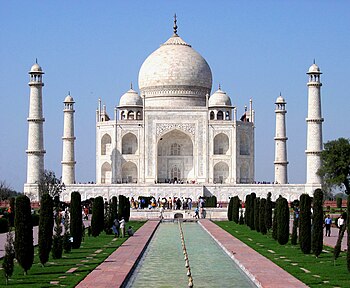 Indian architecture, sculpture, painting, literature (kaavya), music and dancing evolved their own rules conditioned by their respective media, but they shared with one another not only the underlying spiritual beliefs of the Indian religio-philosophic mind, but also the procedures by which the relationships of the symbol and the spiritual states were worked out in detail.
Comment