
 Tweet
Tweet
In the National Socialists of Zion's headquarters:
Kimpler: "We MUST have Oil! Why are our stores emty?!"
Secretary Günther: "The Americans did not wish to continue supplying our stores, Hauptfuhrer... Seems they wish to keep it for themselves."
Kimpler: "All thanks be to Adonai that we have started the building of our most Grand projects so far before they cut the supply! The "Hindenberg" will soon be finished, and the other project is running well... [mumble]"
Günther: "Yes Hauptfuhrer.. ?"
Kimpler: "Send word to the Chinese that they need to clarify their coallision of the willing. We may have to join their struggle as not to be hit by theese communist terrorists! We will also reqognize the Russian royals as the only True leaders of Russia, let there be no misstake!"
Günther:"Got mit Uns!"
Kimpler: "We MUST have Oil! Why are our stores emty?!"
Secretary Günther: "The Americans did not wish to continue supplying our stores, Hauptfuhrer... Seems they wish to keep it for themselves."
Kimpler: "All thanks be to Adonai that we have started the building of our most Grand projects so far before they cut the supply! The "Hindenberg" will soon be finished, and the other project is running well... [mumble]"
Günther: "Yes Hauptfuhrer.. ?"
Kimpler: "Send word to the Chinese that they need to clarify their coallision of the willing. We may have to join their struggle as not to be hit by theese communist terrorists! We will also reqognize the Russian royals as the only True leaders of Russia, let there be no misstake!"
Günther:"Got mit Uns!"


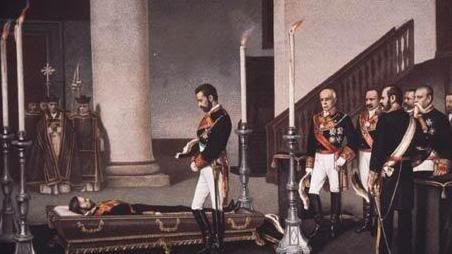 As usual Spain began a new era of transition and change with the death of a great leader, this time it was General Baldomero Espartero; the man who orchestrated the Carlist wars and the subsequent Liberal rebellion throughout the Spanish Empire. His victory ended the rule of the powerful Spanish imperial family, and ushered a new democratic government into power. His successor, Juan Prim y Prats attended his funeral citing that the death of Espartero marked "the end of an era, and the begining of a bright new Spanish century." However the rest of Terra was not as optimistic; a new conflict arose in China between the Chinese Empire and the newly established Marxist government in Russia under Joseph Stalin. The Chinese government accused the Russians of engaging in acts of espionage and terrorism, claming that the Russians (and Americans) had bombed many of their coal mines. The UN under Secretary General Gandhi was slow to react, and China quickly accused the Indians of not only running an ineffective UN, but also accused them of complicity in the bombings. With a world teetering on the brink of all-out war Spain had to change with the times...
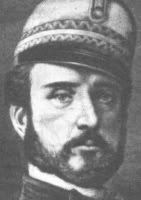 A very close Parliamentary election cemented what everyone thought would happen anyway; an outstanding Liberal victory saw the appointment of Juan Prim y Prats as the second Prime Minister of the Spanish Republic. The victorious Liberal saw this as a mandate to establish the perfect Liberal state, and realized that he had to use his new position to difuse a volatile situation between the Indo-Russo-American alliance and Spain's ally the Chinese. The Liberal victory was quite close, however, as both the National and Traditional parties did better than expected, and fearing a powerful coalition of these two parties Prim y Prats took a more moderate tone, attempting to create a "Grand Coalition" of Liberal, National, and Traditional party leaders to pose a united front and keep Spain unified politically. This would prove to be a mistake on the part of the Prime Minister, however the Liberals would enjoy decades of power before this would come to a head.
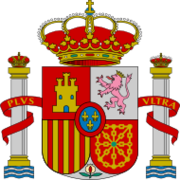
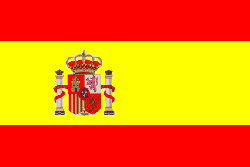 Prime Minister Prim y Prats understood the changing of the tides throughout the world. He especially realized that more radical ideas such as Marxism and Fascism were taking a strong hold on Terra, and didn't want Spain to get caught up in the fervor as well. His response, then, was simple; instead of combat these new forces, embrace them. Now Prim y Prats was a military man, and understood that if not for the military the Liberals would never have won to begin with, further he realized that many of these soldiers had become either members of the Traditional party (the idea of Spanish pride and tradition was compelling to many of these young soldiers) or members of the National party which took on a facsist tone. His first order of business was to add language to the constitution citing "Spain's Legacy," and the "Sovreignty of the Spanish State." He even went so far as to change the national flag and emblem to include more areas of Spain (the original flag comprised of the symbols of Castille and Leon were now replaced with the emblem of the House of Bourbon, the Emglem of Aragon, and pillars to represent Bolivia and Toledo, as well as the mantra of the great Emperor Carlos V "Plus Ultra.")
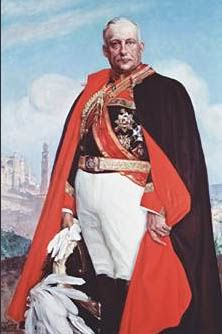 While these new policies did help establish the Grand Coalition, and while they did instill many Spaniards with feelings of pride, they also managed to grant more legitimacy to parties like the Traditional party which openly called for the return of the imperial family to Spain. Their leader, Miguel Primo de Rivera, even wore imperial garb to convey his support of the imperial family. He is quoted saying; "It is a horrible thing what we have allowed to occur, our great and venerated royal family runs from these Marxist dogs and we do nothing!" While the Traditional party gained many things they wanted in Parliament, they were still a relatively weak party politically, until the day that Traditional party leader Miguel Primo de Rivera met with National party leader Francisco Franco y Bahamonde; Spain would never be the same again.
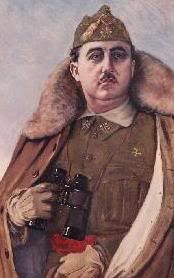 Francisco Franco was an outspoken member of the National party, and had used his charisma to rise upt he ranks and in many ways give the party itself more popularity. The party's ideals were simple; they considered Spain to be one unit, and each Spaniard was an organ or body part that each had a different role, some were more vital than others. The Nationalists considered Spain to be the greatest country on Terra, no nation was better and in their minds no nation deserved the respect and admiration that Spain did. In other words the Nationalists believed that everything Spain did was right, and anything that went against Spain was wrong. When Primo de Rivera and Franco met in 1616 they learned a few things about eachother's ideologies, and realized quickly that the Nationalists and Traditionalists had a lot to offer. The natural enemy of both sides was Marxism; which saw no states, and universal communism as its ideals. To the Nationalists this was unnatural, and to the Traditionalists this destroyed their love of God, King and Country. In 1616 Miguel Primo de Rivera and Francisco Franco y Bahamonde established the Falange (Phalanx) Party, dedicated to bringing Spain "back to her golden age." What "golden age" they were speaking of was unclear...
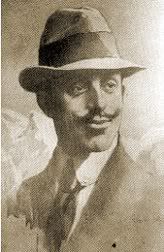 For decades upon decades Anastasia of Russia and Fernando III of Spain ran from KGB authorities, avoiding what would become certain death. Finally their escape ended as Chinese agents captured both Anastasia and Fernando. The Chinese realized if they returned Anastasia to Russian authorities she would be summarily executed, this was not true for Fernando. In 1617 the Chinese government turned Fernando over to Spanish authorities, and through influence by the Falange Fernando was cleared of his charges (treason against the Spanish people) and allowed to return to his estate in Toledo. There he met with Miguel Primo de Rivera to discuss plans to isntall him as a ceremonial Monarch, the Falangists realized in doing so they could return Spain to its roots, and give the Falange a symbol of power and prestige. Not to mention the fact that it would really piss off the Marxists. The Prime Minister was reluctant to do so, especially so soon after the revolution and he declined the move. The Grand Coalition was falling apart quicker than it was established, Prime Minister Prim y Prats understood that if he did not prevent another World War the Fascists would have their moment, and gain their advantage through elections. The Falange were strong in Parliament, but did not have the numbers for a "vote of no confidence." So they bided their time, meanwhile Miguel Primo de Rivera and Fernando III planned their next move...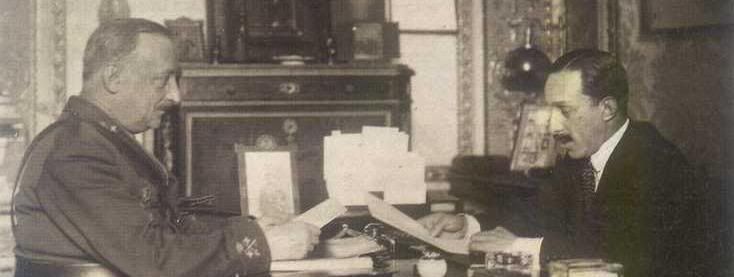
Comment