Announcement

Collapse
No announcement yet.

The 2012 Off Topic Celebrity Dead Pool

Collapse
X
 
  • Filter
  • Time
  • Show
Clear All
new posts

  • Grandpa Troll
    replied
    Boxing writer Bert Sugar dead at 75

    MOUNT KISCO, N.Y. (AP) -- Bert Sugar, an iconic boxing writer and sports historian who was known for his trademark fedora and ever-present cigar, died Sunday of cardiac arrest. He was 75.

    Jennifer Frawley, Sugar's daughter, said his wife, Suzanne, was by his side when he died at Northern Westchester Hospital. Sugar also had been battling lung cancer.

    "Just his intelligence and his wit and his sense of humor," Frawley said when asked what she will remember about her father. "He was always worried about people. He was always helping people."

    Sugar was inducted into the International Boxing Hall of Fame in 2005. According to the hall's website, Sugar wrote more than 80 books, including "The 100 Greatest Boxers Of All Time." He also appeared in a handful of films, including "The Great White Hype" starring Samuel Jackson.

    "Around ringside, it's not going to be the same with Bert not there," said Jack Hirsch, the president of the Boxing Writers Association of America.

    Sugar was born in Washington, D.C., in 1936. He graduated from Maryland and went to law school at Michigan. He passed the bar in his hometown and worked in advertising in New York City before he got into writing in the 1970s.

    "Bert was obviously a showman in the way he did things outwardly, very flamboyant, but in quiet moments I found him to be an extremely modest individual," Hirsch said.

    Frawley said arrangements for a memorial service are still pending and anyone wishing to honor Sugar should make a donation to the boxing hall.

    "He was really a brilliant man," she said.


    Read more: http://sportsillustrated.cnn.com/mma...#ixzz1qBRxyhox

    Leave a comment:


  • SlowwHand
    replied

    Leave a comment:


  • ColdWizard
    replied
    Sloww is claiming that one royal makes him up-to-date on royalty.

    Leave a comment:


  • Wezil
    replied
    Yes.

    That's the Queen's hubby Sloww.

    Leave a comment:


  • SlowwHand
    replied
    2) Prince Phillip, Duke of Edinburgh

    Ahem!

    Leave a comment:


  • Wezil
    replied
    Fingers crossed.

    Former U.S. vice-president Dick Cheney is recovering after having a heart transplant.

    That's according to his office. It released a statement Saturday disclosing the surgery, and saying that Mr. Cheney has been on the transplant list for more than 20 months.

    Aide Kara Ahern says the former vice-president is recovering in the Intensive Care Unit of Inova Fairfax Hospital in Falls Church, Va., after undergoing the surgery. She says the former vice-president does not know the heart donor's identity.
    More related to this story

    Chavez heading back to Cuba for radiation therapy

    Mr. Cheney suffered a heart attack in 2010, his fifth since the age of 37. He had bypass surgery in 1988, as well as two subsequent angioplasties to clear narrowed coronary arteries.

    In 2001, he had a special pacemaker implanted in his chest.

    Leave a comment:


  • Wezil
    replied
    Originally posted by molly bloom View Post

    Deathwatchers- have you brushed up on your ailing and aged royalty ?

    That was Omni's area (New World Order) but he don't play no more.

    Leave a comment:


  • molly bloom
    replied
    No Longa Kinga Tonga:

    His Majesty King Siaosi Tupou V of Tonga, who has died at the age of 63, was traditionally regarded as the descendant of the sky god Tangeroa, but gave up many powers to launch an era of democracy on the South Sea island chain over which his family had long ruled.
    Known to English speakers as George Tupou V, the king inherited a febrile atmosphere on the death in 2006 of his father, Taufa’ahau Tupou IV, who had steadfastly resisted constitutional reform for 41 years. With an elite appointed by royal decree securing large chunks of the country’s wealth, resentment had grown among many amongst Tonga’s disfranchised poor.

    Within two months of Tupou IV’s death, mobs set parts of the capital Nuku’alofa ablaze and looted cars and shops. Eight people died in rioting which was widely blamed on the slow pace of democratic reform. Such was the impact of the violence that the new king delayed his coronation ceremony, calling instead for a rebuilding of “mutual responsibility”.

    It was not until late July 2008 that the framework for the transfer of power to a democratically elected parliament had been established. Though the royal house still retained some ceremonial authority (such as the power to commute sentences) Tonga had in effect become a constitutional, rather than absolute, monarchy. Three days later, on August 1, Siaosi Tupou was finally crowned king at an elaborate five day ceremony attended by the Duke and Duchess of Gloucester. Earlier, in a traditional ceremony, his sovereignty over Tonga’s 170 islands was recognised by 200 nobles, who slaughtered pigs and offered kava, a hallucinogenic drink, in his honour.

    He was born on May 4 1948, the eldest son of Taufa’ahau Tupou IV and Queen Halaevalu Mata’aho. Respect for the king his father was drummed into him from an early age. “We were always encouraged not to be beastly children and not to misbehave in public,” he said later. “Like others in my generation, our parents would whip us if we were naughty.”

    His early education was conducted in Auckland before he travelled to the Leys School in Cambridge (where he associated with the “criminal” elements in class “and then took my punishment like everyone else”). He later attended Sandhurst, which he said taught him not to take life too seriously; he retained an immense fondness for Britain throughout his life.

    He was appointed Crown Prince in 1966, and took responsibility for Tonga’s foreign affairs from the late 1970s. But as he rose to prominence his courtly manners and dress only seemed to underline the gulf between Tonga’s elite and its people.

    While most Tongans favoured relaxed, light clothing suitable to the warm weather, Crown Prince Tupouto’a, as he was then known, was rarely seen in anything but Savile Row suits. His only concession to the climate was a pith helmet. He was also known to affect a monocle.

    His grandmother, Queen Salote, had won a place in British hearts at the Coronation in 1953 by smiling while riding in an open carriage through the rain. George Tupou V, however, preferred to travel in a London taxi cab, eventually acquiring two, one of which he converted to run on electricity which he generated with a windmill on the grounds of his residence. The reason for his choice was entirely practical: “An English taxi is extremely easy to get in and out of wearing a sword, a spiked helmet or spurs. I realise these are not primary considerations for buying a car for most people but it is for me.”

    Away from ceremonial engagements Tupou V, who was unmarried, was reported to enjoy sailing model boats in his swimming pool and playing computer games. He had a sharp and inquiring mind and loved to travel. He also launched a brand of beer called Royal.

    His younger brother, Crown Prince Tupouto’a Lavaka, succeeds to the throne.


    His Majesty King George Tupou V, born May 4 1948, died March 19 2012
    Find information, resources and relevant links for tollbit-host.com. This domain may be for sale.


    Click image for larger version

Name:	tongaKing_1771460b.jpg
Views:	1
Size:	44.7 KB
ID:	9092993

    Deathwatchers- have you brushed up on your ailing and aged royalty ?

    Leave a comment:


  • Dinner
    replied
    He says he's not mild he's very hot. Are you sure you live in San Diego? It's a pretty common Spanish phrase even among the white folks living in the suburbs like me.

    Leave a comment:


  • Sava
    replied
    Originally posted by molly bloom View Post
    Have you ever been mistaken for being mildly interesting ?
    No. Nothing about me is mild. MUY CALIENTE

    Leave a comment:


  • molly bloom
    replied
    Originally posted by Sava View Post
    I CAME TO COCKBLOCK YO PARALYZED ASS

    why you tryin to get a rustu TROMBOME
    Have you ever been mistaken for being mildly interesting ?

    Leave a comment:


  • Sava
    replied
    I CAME TO COCKBLOCK YO PARALYZED ASS

    why you tryin to get a rustu TROMBOME

    Leave a comment:


  • molly bloom
    replied
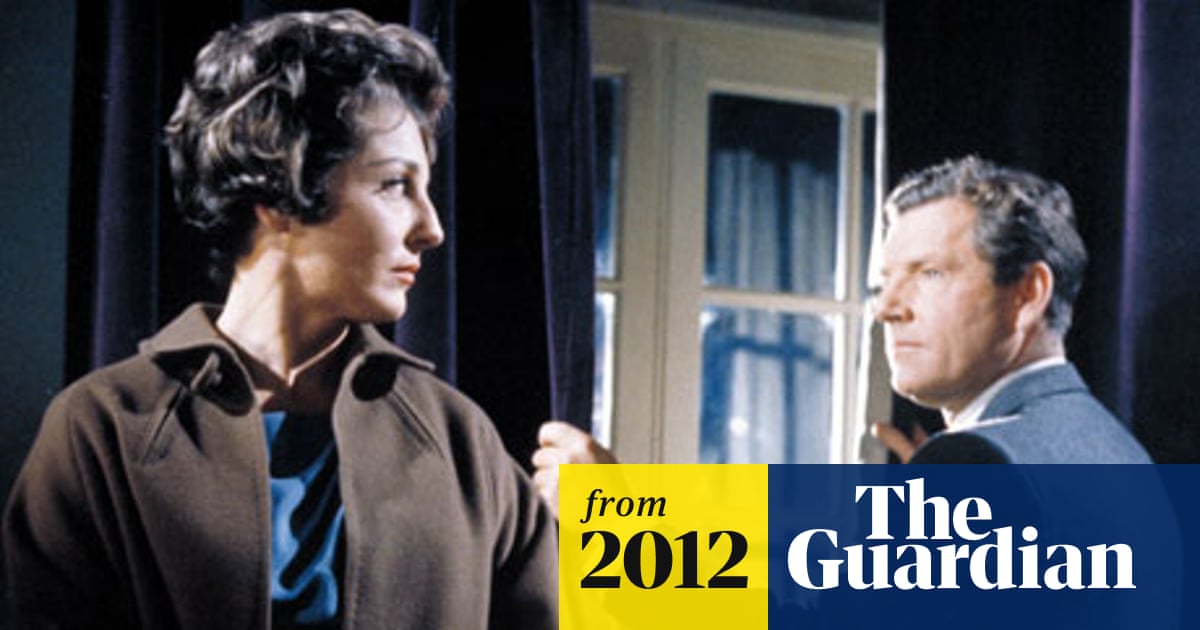
    Some of you will know her from her appearances in Hitchcock films:

    Faith Brook, who has died aged 90, was an actor of remarkable elegance, poise and beauty. She was the daughter of Clive Brook, a pillar of the so-called Hollywood Raj, the British acting community that settled in Los Angeles in the 1930s. He appeared opposite Marlene Dietrich in Shanghai Express. Even if she was never a star on the scale of her father, Faith enjoyed a rich and productive career in theatre, film and television on both sides of the Atlantic.

    She was born in York and moved with Clive and her mother, Mildred, to California, where her father had already put down roots. Her brother, Lyndon, was born four years after Faith and also became a successful actor.

    She was educated in Los Angeles, London and Gstaad, Switzerland. She made her stage debut in Santa Barbara in September 1941 in Enid Bagnold's Lottie Dundass and a few months later appeared on the New York stage. She returned to Britain in the middle of the second world war, serving with the Auxiliary Territorial Service and joining the Stars in Battledress unit that brought drama to the troops. Among the roles she played was that of the anguished wife, Patricia, who forsakes her film-star lover for her fighter-pilot husband in Terence Rattigan's intensely moving Flare Path.

    In 1946 Brook joined the Bristol Old Vic, which shared with Birmingham Rep premier league status among regional theatres and offered all the benefits of a permanent company. In one season alone, she played Dorinda in George Farquhar's The Beaux' Stratagem, Olivia in Twelfth Night and Pauline in Jenny Villiers. Back in London, she joined the Old Vic company at the New theatre. She was much praised, once again, for her aristocratic Olivia in a Twelfth Night directed by Alec Guinness; for her flirtatious Millamant in William Congreve's The Way of the World; and for her performance as the eccentric governess Charlotta in an exquisite revival of The Cherry Orchard, starring Edith Evans and Cedric Hardwicke.

    Had she chosen, Brook might have become a leading classical player in the Peggy Ashcroft mould. But her American upbringing enabled her to appear freely in the US, where she spent much of the early 1950s. She took over the role of the martyred missionary Celia Coplestone, crucified "very near an ant-hill", in the Broadway production of TS Eliot's The Cocktail Party. She also played Shaw and Shakespeare in summer stock, was the scissor-wielding Sheila in Frederick Knott's Dial M for Murder and had a leading role in an American TV series, Claudia: The Story of a Marriage. But a slight mystery remains as to why, with her looks and talent, she did not seize the moment to become a dominant force in British theatre.

    Instead, she continued to commute between New York and the West End, where she appeared in a great variety of plays: sometimes challenging stuff such as Sartre's Vicious Circle or Charles Morgan's The Burning Glass, at other times quilted divertissements such as Roar Like a Dove or Licence to Murder. Occasionally she vouchsafed glimpses of something remarkable. She was Dalila opposite Michael Redgrave's towering Samson in a revival of Milton's Samson Agonistes that opened the Yvonne Arnaud theatre, Guildford, in 1965. She was also a memorably sensuous and drink-fuddled Gertrude to Ian McKellen's Hamlet in a revival that came to the Cambridge theatre in London in 1971. And she was excellent playing opposite Guinness, her old friend, in 1975 in Alan Bennett's The Old Country, about a public-school Marxist living in Russian exile. In her 80s, she returned to York to perform an extended monologue, The Colour of Poppies, based on a novel by Noëlle Châtelet.

    Alongside her stage work, Brook appeared in a great number of films, starting with Alfred Hitchcock's Suspicion (1941) and including The 39 Steps (1959), To Sir, With Love (1967) and Eileen Atkins's version of Mrs Dalloway (1997). She appeared in many classic TV series such as the BBC's War and Peace (1972-74) and Channel 4's The Irish RM (1983-84). In private, she was a longtime member of the British Humanist Society. While it may be ungrateful to wish that she had spent more time conquering the commanding heights of the classic repertory, she brought class, style, vocal clarity and an enduring beauty to everything she did.

    She was married twice: first to Charles Moffett and then to Michael Horowitz, with whom she had a son, Brook. Both marriages ended in divorce. She is survived by her son.

    • Faith Brook, actor, born 16 February 1922; died 11 March 2012
    Actor of poise and beauty who enjoyed a rich and productive career on both sides of the Atlantic


    With Dirk Bogarde:

    Click image for larger version

Name:	4239955008_5fa12710d9_z.jpg
Views:	1
Size:	153.9 KB
ID:	9092967

    Leave a comment:


  • Wezil
    replied
    This is what happens when our chosen celebs refuse to play the game. Things get tense. :nervous:

    Leave a comment:


  • molly bloom
    replied
    Originally posted by Uncle Sparky View Post
    Why can't we play nice?
    You're looking for the 'Anne Of Green Gables' Forum, you Canucklehead %^&!!!!*!


    (Jes' jokin' Unca' Sparks... )

    Leave a comment:

Working...
X