Announcement

Collapse
No announcement yet.

In Other News

Collapse
X
 
  • Filter
  • Time
  • Show
Clear All
new posts

  • Broken_Erika
    replied
    Snuffleupagus, a newly described species, is an adorable little predator

    The seahorse cousin is named for its 'uncanny' resemblance to the Sesame Street character

    Click image for larger version

Name:	1280px-Solenostomus_snuffleupagus.jpg
Views:	10
Size:	301.0 KB
ID:	9489607

    Scientist David Harasti never had any doubt what he would name the tiny orange creature he first spotted on a diving expedition in Papua New Guinea in 2003.

    But it would take another two decades for Harasti and his colleague Graham Short to find the elusive fish again, study it, and officially designate it a new species.

    Meet Solenostomus snuffleupagus, namedafter the beloved Sesame Street character, Mr. Snuffleupagus.

    "Snuffy for short," Graham Short, an ichthyologist at the California Academy of Sciences and the Australian Museum, told As It Happens host Nil Kӧksal. "The resemblance was quite uncanny."

    Short and Harasti have now written a new paper, published in the journal Fish Biology, describing S. snuffleupagus as a new species of ghost pipefish that makes its home along coral reefs, and disguises itself as red algae.

    'The awesome power of natural selection'


    The fish has quite a few things in common with its namesake — mainly its orange-brown colouring, the long filaments that look like shaggy hair, and its elephant-like snout.

    Milton Love, a marine biologist at the University of California’s Marine Science Institute in Santa Barbara, Calif., says the fish's muppet-like appearance demonstrates "the awesome power of natural selection."

    "Clearly, all of the morphological features that we find endearing are of some value to the animal," Love, who was not involved in the research, said in email.

    "Or, and here is another hypothesis, Gaia created this fish after having one too many of those rum drinks that come with those little umbrellas."

    But its similarity to Snuffleupagus goes deeper than meets the eye.

    It's also extremely elusive, much like Mr. Snuffleupagus, who, in his early appearances on Sesame Street, was only ever seen by Big Bird, leading the other characters to mistakenly suspect he was imaginary.

    Harasti and Short tried for years to spot a snuffy fish again after that first 2003 sightingto no avail.

    Their luck changed in 2021 when some scuba diver buddies started seeing the little creatures on the Great Barrier Reef and got in touch. The scientists headed to Australia to see for themselves, and on their second dive, they found the fish.


    "It's an understatement to say that we screamed under water," Short said. "We high-fived, gave each other a hug, and we were just so excited."

    An itty-bitty carnivore


    In order to describe the fish and confirm it as a previously undocumented species, the scientists looked at CT scans of specimens first collected in 1993 during exhibition to far north of Queensland, Australia, in the Torres Strait.

    Short says they were collected alongside several hundred other fish specimens and tucked away until he and his colleague came looking. But even back then, he says ichthyologist Helen Larson, who was part of the expedition, suspected it was a new species.

    S. snuffleupagus, like other ghost pipefish, is a cousin of the seahorse.

    Using iNaturalist, the citizen science platform, the scientists confirmed sightings of it in Tonga, Papua New Guinea and New Caledonia, suggesting distribution across the southwestern Pacific.

    And while it may look like Big Bird's beloved bestie, there are a few significant differences between S. snuffleupagus the fish and Snuffleupagus the muppet.

    While Snuffleupagus is famously big — bigger even than Big Bird — S. snuffleupagus is roughly four to five centimetres long, about the size of an airpod.

    And while Snuffleupagus would never harm a fly, S. snuffleupagus is a natural-born killer.

    "They look adorable, very cute. They're very delicate and slow moving in the water. And it's been assumed that they only eat small crustaceans like small shrimp," Short said.

    Not so, he says. The CT scans found tiny fish skeletons in the specimens' stomachs.

    "Every fish has a role, and they are either eating or being eaten. It turns out, ghost pipe fish and in particular, snuffy … they're just like other fish," Short said. "They're predators."


    Short says the widespread interest in S. snuffleupagus has been a delight, and he hopes it won't be the last fish he brings attention to.

    He and his colleague already have their eyes on another species of ghost pipe fish that is known to divers around the Pacific, but hasn't been formally described.

    If it works out, they plan to name it after another muppet, but Short wouldn't say which one.

    "Not yet, because I need approval," he said.

    S. snuffleupagus, a newly described species of fish, is named after the beloved Sesame Street character, Mr. Snuffleupagus, to which it bears an "uncanny" resemblance.

    Leave a comment:


  • BeBMan
    replied
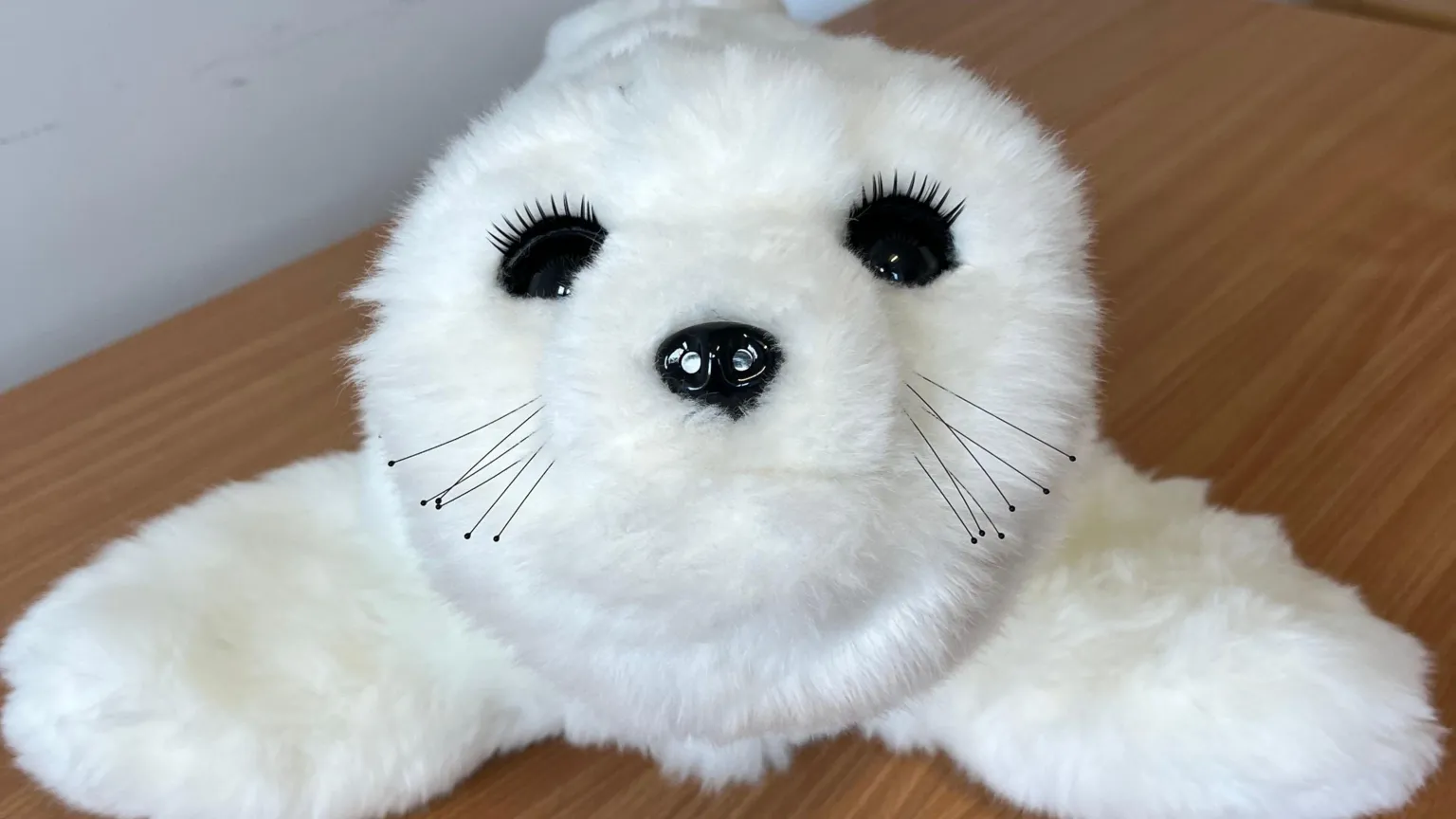
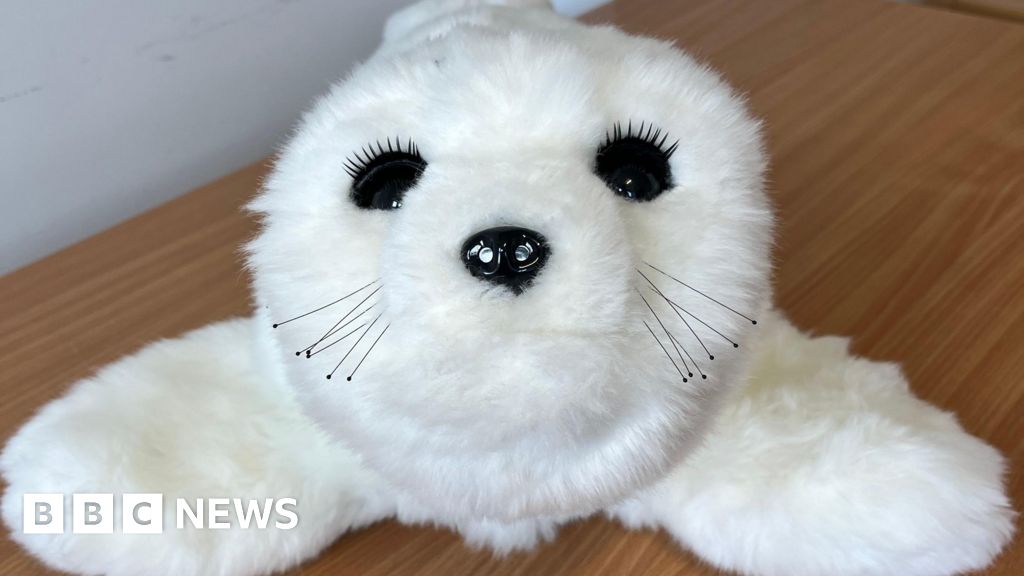
    A robotic seal is being piloted in Kent to explore whether experience of mental health outpatient appointments can be improved.

    The furry robot called Sammy will be used in meetings at Kent and Medway Mental Health NHS Trust to help put patients at ease and engage more with treatment.


    If it helps, Trump may rename it to Operation Epic Furry

    The robotic seal Sammy will be present at mental health patient appointments to reduce anxiety.

    Leave a comment:


  • Broken_Erika
    replied
    Collision leaves motorcycle hanging from traffic light in Delta, B.C.

    Click image for larger version

Name:	motorcycle-streetlight-delta.jpg?quality=65&strip=all&w=1200.jpg
Views:	40
Size:	98.1 KB
ID:	9489497

    A motorcycle rider is in hospital in Delta, B.C., following a collision with another vehicle that left his bike hanging from a traffic light.

    The collision happened on Saturday in the 7100 block of Scott Road. Delta police said the call came in just before 3 p.m.

    The motorcycle rider was hospitalized with serious but non-life-threatening injuries. The driver of the other vehicle was not injured, police said.

    According to police, Scott Road was closed between 72nd Avenue and 70th Avenue as emergency crews worked to remove the vehicles and debris from the roadway.
    A motorcyclist in Delta, B.C., was hospitalized with serious injuries Saturday afternoon following a collision that left his bike hanging from a traffic light.

    Leave a comment:


  • BeBMan
    replied

    Leave a comment:


  • Broken_Erika
    replied
    Orphaned baby hippo to be hand-reared by keepers at Kenya sanctuary

    Click image for larger version

Name:	a85f3200-4948-11f1-861c-270dbba6d6ae.jpg.webp
Views:	46
Size:	109.5 KB
ID:	9489433

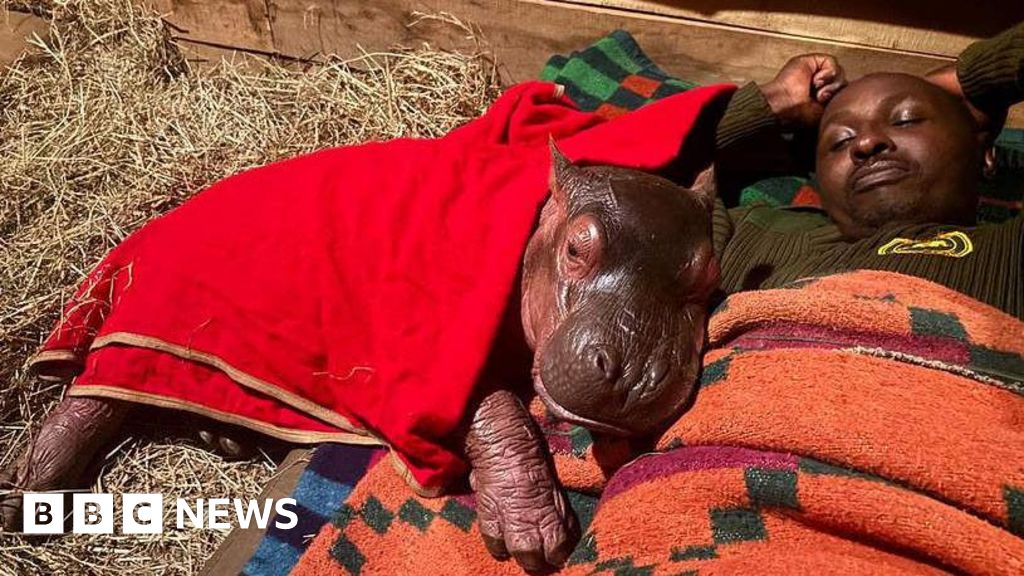
    A baby hippo found desperately nudging its dead mother at a lake in Kenya over the weekend is now being hand-reared at a wildlife sanctuary after being rescued.

    The calf, which has been named Bumpy, was "just days old" when it became orphaned, according to Sheldrick Wildlife Trust, a charity whose keepers are now taking care of it.

    The Kenya Wildlife Service (KWS), which rescued the calf and handed it over to the wildlife charity for specialised care, said the mother may have died from natural causes.

    Sheldrick said it was possible that the hippo's mother died in a "territorial fight... protecting her calf, as infanticide is common in hippo society".

    KWS said rescuing the calf from the water was a "logistical challenge", with the calf clinging to its dead mother. It said it had to make a "painful decision" to use the decomposing body "as the only anchor to safely reach the calf".

    According to Sheldrick, the mother had been dead for more than a day or longer, based on the level of decomposition.

    After being rescued, the baby hippo spent its first night at a nursery in the capital Nairobi, being fed on milk and swaddled in a blanket.

    The charity says Bumpy "was clearly desperate for comfort and connection" and has been glued to his keepers ever since.

    The calf was later flown by helicopter to Sheldrick's Kaluku sanctuary near Tsavo East National Park, to be taken care of until it is ready to be released into the wild.

    The sanctuary has been sharing Bumpy's story and photos at its new location – at a pool near the Athi River which runs through the park.

    "[Bumpy] spends a lot of the day submerged - but never alone. A rather waterlogged keeper is by his side throughout the day, in the water or on the ground," Sheldrick adds.

    "He is a very snuggly creature and is happiest when nestled on or against someone," the sanctuary adds, alongside a photo of the hippo with its head on the keeper's lap.

    Bumpy joins another young hippo at Kaluku who is nearly a year old, although they are being kept in different areas, the sanctuary says.

    Both are expected to be released when they grow up to join other hippos living in the wild.

    In the wild, a hippo calf nurses for uo to a year or more but remains closely attached to its mother for several years until around sexual maturity, according to wildlife experts.

    Founded in 1977, the Sheldrick Wildlife is renowned for its care of orphaned elephants and rhinos, rescuing and reintegrating them into the wild.

    The baby hippo, which has been named Bumpy, was found clinging to its lifeless mother at a lake.

    Leave a comment:


  • Uncle Sparky
    replied
    I am definately not a monarchist.

    However Congrats to Louise Arbour, our new Governor General (King's rep in Canada), a former Supreme Court of Canada Justice, and a former Chief Prosecutor of the International Criminal Court. She made history with the indictment of a sitting head of state, Yugoslavian president Slobodan Milošević, as well as the first prosecution of sexual assault as a crime against humanity.

    Maybe she can lend her expertise to our southern neighbours? ... soon?​

    Leave a comment:


  • dannubis
    commented on 's reply
    ................................42

  • BeBMan
    replied


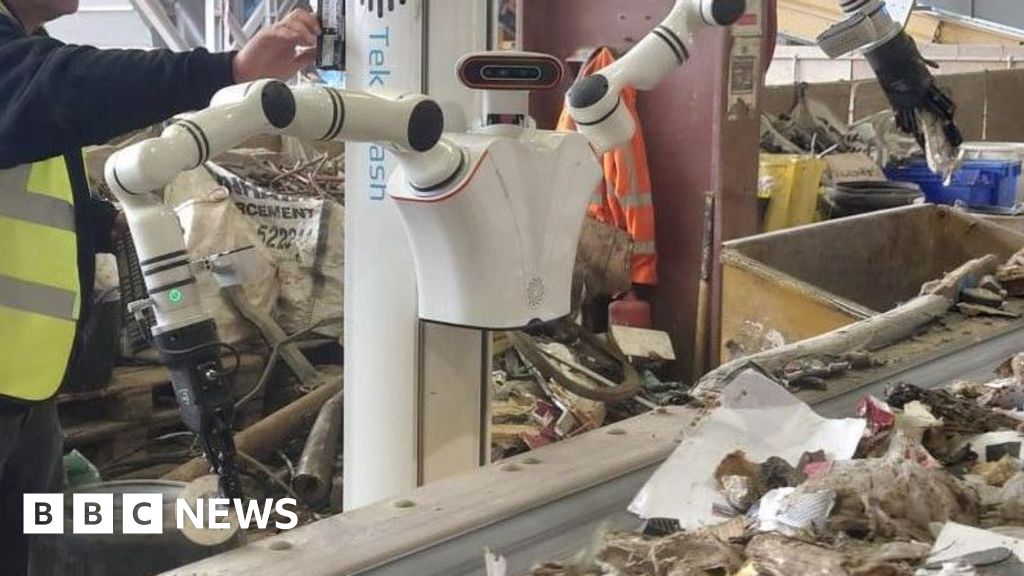
    Sounds great, but let's hope this doesn't backfire when some Super-AI takes over everything. I mean them robots could decide to use humans for boring, heavy or dirty tasks then, so that they have more time to compute something nobody understands

    Leave a comment:


  • BeBMan
    replied
    Good thing this didn't take weeks, like the whale drama here

    Leave a comment:


  • Broken_Erika
    replied
    'I can't leave him': Sask. tow truck driver rescues moose trapped in ice

    Clint Gottinger put all calls on hold to rescue the animal

    ​"Bring some blankets out — I've got a moose."

    Clint Gottinger hadn't envisioned having to say those eight words to his wife after a long day's work last Saturday. But there he was, pulling up to their family home with a cold, tired moose on the deck of his tow truck.

    Gottinger, who owns Rebel Towing, said he was on his way to do a couple of tow jobs around 5 p.m. CST.

    ​His plans quickly changed.

    He spotted a moose that had fallen through some ice not far from his home in Kelvington, Sask., about 200 kilometres east of Saskatoon.

    "I can't leave him," Gottinger remembered thinking. "Everyone has to wait. This is a priority."

    He turned his truck around and backed up as close as he could to the beleaguered animal.

    His plan was to slide the deck of the tow truck down and use a soft sling to pull the moose out. The animal appeared leery, but was also clearly exhausted.

    Gottinger took his sling and threw it around the moose's neck area.

    "I started wenching and towing. He was kind of helping a bit," he said.

    The moose's bottom half was the first to pop out of the ice. Gottinger said some neighbours showed up to lend a hand.

    "We got the sling around his butt and popped him right out and then onto the deck," he said.

    He said the moose was out by around 5:30 p.m. Gottinger then took it home so it could rest and warm up. He phoned his wife on the way.

    "Once I pulled up there, this moose sitting on the deck, she [came] running out with blankets," he said.

    Gottinger set the moose down on the pile of blankets, wrapping one of them over it, before leaving it to recover. He said he would come check on the moose periodically. The moose would even let him give some ear and cheek scratches.

    The moose finally stood on its feet around 11 p.m.

    "I thought, well, I'll see if I can walk up and scratch his cheek again. But he kind of grunted and put his leg up."

    He said the moose stuck around his house all of Sunday, lingering just across the road. It finally left Monday morning.


    Gottinger took to social media to share his encounter. He named the moose "Rebel" after his towing company.

    The post racked up more than 1,000 likes and 100 comments.

    "It's a happy story," Gottinger said.

    "Everyone needs a happy story."

    'A very good chance of recovery'


    Dr. Ryan Brook, a professor in the college of agriculture and bio resources at the University of Saskatchewan, said higher temperatures and the fact the moose is still young make for a higher chance of it surviving, but it's not out of the woods yet.

    Brook said that when a moose goes through a traumatic event, it can be prone to "capture myopathy." The often fatal metabolic condition can result in severe muscle damage, kidney failure and heart failure, and show up within hours or weeks after an incident occurs.

    "I'm sure it was quite a traumatic experience for the moose, and so I think there's certainly gonna be a recovery," Brook said.

    He said the moose lingering near Gottinger's home in the aftermath is not unusual. He said traumatized moose will often stay in an area for days at a time to rehydrate, rest, and recover mentally and physically.

    "They will often find some kind of heavy hiding cover. They might duck underneath the big spruce tree or or hit a big clump of aspen forest and bed down in there," he said.

    Brook said that when a moose does recover, releasing it back into the wild is the most dangerous part.

    "That's when they get back on their feet and that's when they, if they feel like they're in danger, then they can certainly, moose will attack," he said.

    Brook said it's important to call wildlife experts, especially when dealing with larger animals like a moose. He said experts can ensure a safe capture, keep the animal calm and prevent conditions like capture myopathy, giving animals the greatest chance at survival.

    As for Rebel the moose, Brook is optimistic.

    "As long as it's able to drink and find something to eat and rest, my sense is there's probably a very good chance of recovery for it."

    Clint Gottinger, a tow truck driver in rural Saskatchewan, was heading out to work when he noticed a moose trapped in some ice.

    Leave a comment:


  • BeBMan
    replied
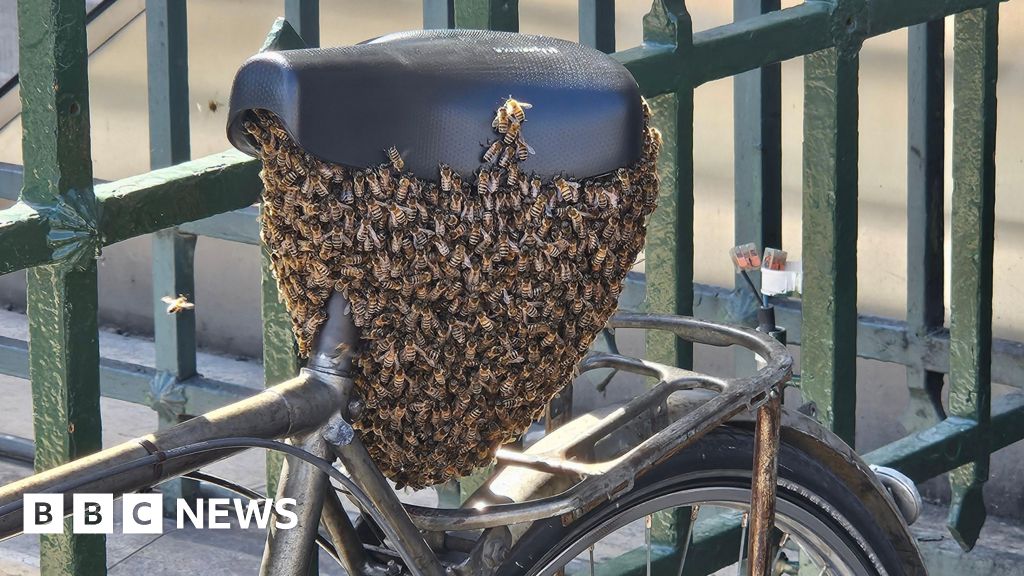
    The swarm gathers underneath the saddle of a bike locked to the railings of a metro station.


    Leave a comment:


  • BeBMan
    replied
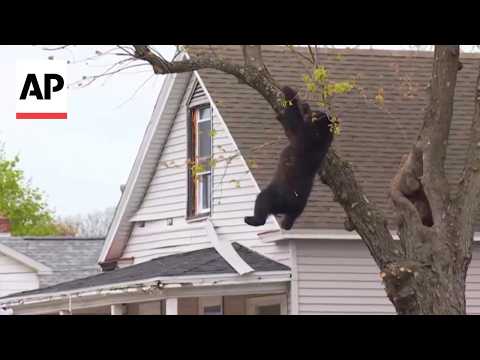
    It's raining...bears?

    Leave a comment:


  • BeBMan
    replied
    Seres' plans show how stiff competition in the EV space is putting pressure on carmakers to innovate.


    Can we allow a toilet gap?

    Leave a comment:


  • pchang
    commented on 's reply
    Most likely the real problem was a combination of lack of food (overfishing) and environmental irritants (pollution).

  • BeBMan
    replied
    That whale became stuck again, and IIRC freed again (?), then stuck again (?). Now probably not surviving.

    What's "funny" (not really) is that in the early days of that drama it was a big news story. Blessed are those who don't have bigger probs...thing is just, now there are some crazies trying to blame local politicians and scientists for the whale's bad condition/near-death. All with death threats against those politicians and scientists on top

    Leave a comment:

Working...
X