-
Two dudes on paddleboards save raccoon from drowning | The Moment

Leave a comment:
-
Elderly US woman shocked to receive racy new car licence plate
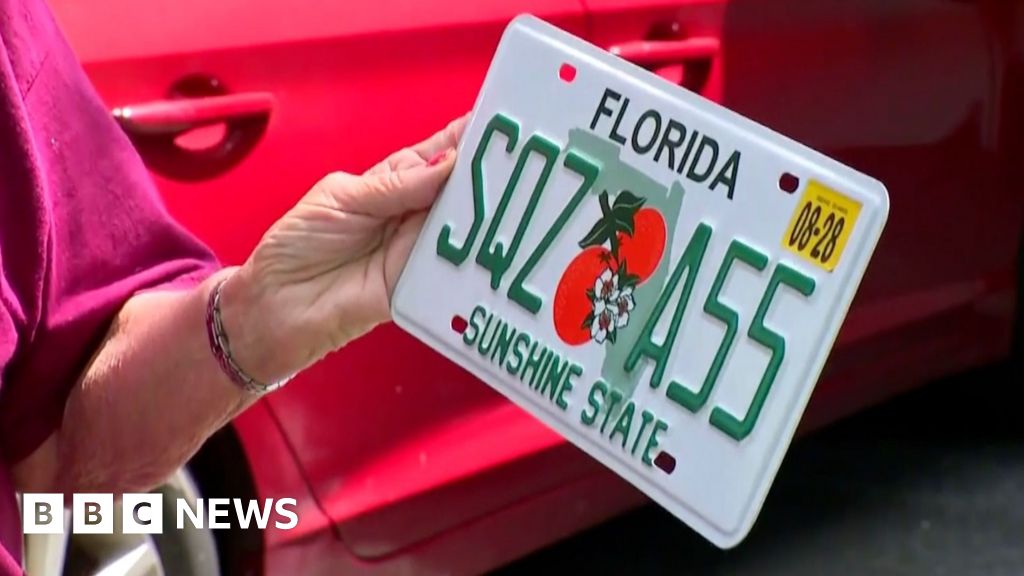
An elderly woman in Florida has become the talk of her retirement community after vehicle licensing officials assigned her with a racy number plate.
Pompano Beach resident Nancy Dello Stritto says she "went ballistic" when she discovered her new license plate number was "SQZ A55".
"I don't think a senior who is almost 77 will be driving around with a plate that has that to say," Dello Stritto told CBS News in Miami, adding: "How could that pass inspection?"
She said some neighbours have encouraged her to exchange the plate, while others - including family members and her sons - have told her to keep it.
Dello Stritto said she was expecting a replacement plate and, at first, did not notice anything amiss when she got it in the mail.
Despite her displeasure, she has decided to keep the plate "just to see what happens".
"I'm resigned to it; maybe it was destined for it to be on my car," Dello Stritto said.
"I can handle it if I get a few honks here and there. Actually, being over 70, I might like a few honks."
According to CBS, Florida license plates have been manufactured at a state prison in North Florida for nearly 100 years, before being distributed through state agencies.
Broward County officials have said plates that are deemed offensive can be exchanged for free.
Leave a comment:
-
Edit: just realised this could have been a fun separate "Serb saved by woman" thread. Oh well ...Leave a comment:
-
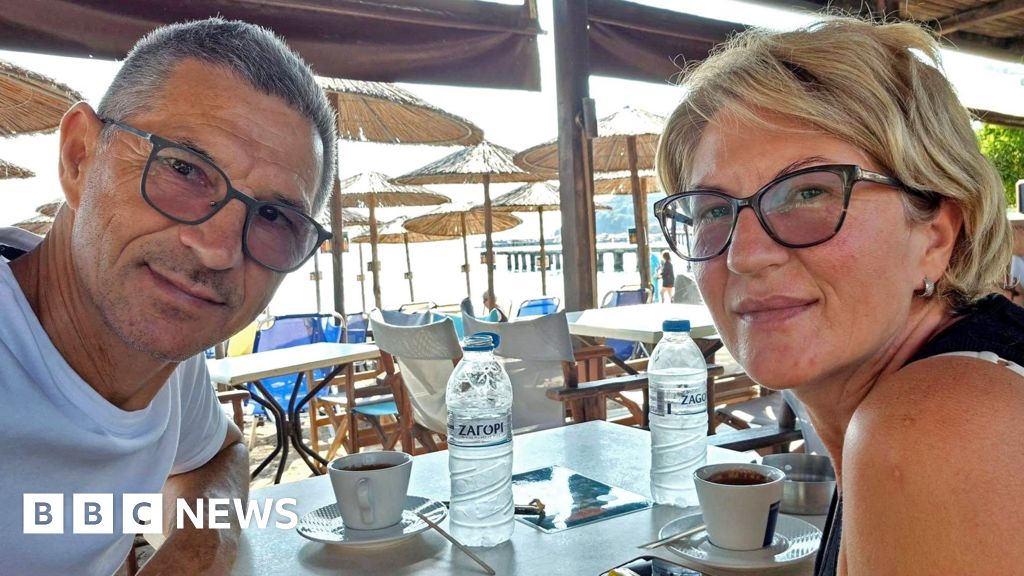
A woman who held the legs of her husband as he was nearly sucked head-first out of a Ryanair cabin window on Friday said "half of his body was sticking out of the plane".
Svetlana Grković, who was travelling with her husband Ljubisa Karović from Greece's Thessaloniki to Germany's Memmingen, told Greek public broadcaster ERT he was "outside up to his chest" for two minutes.
"I immediately reacted and grabbed his legs. I thought: 'If we die, we die together,'" Grković told Serbian outlet Nova.
With the help of two other passengers, Grković said she was able to pull her husband - who she said lost consciousness three times - back inside.

I flew Ryanair once, but not this Malta sub-airline of them .Leave a comment:
-
This guy should be in the next StarWars movie and/or become the next British PM
Leave a comment:
-
Pfff, fighting 'a trash can'. What disrespect of Count Binface from CNN.
Leave a comment:
-
Leave a comment:
-
‘Give me Beyonce’ – Ugandan army chief challenges Jay-Z
Uganda’s Chief of Defence Forces General Muhoozi Kainerugaba has sparked fresh controversy after publicly declaring his desire to marry global music superstar Beyoncé and challenging her husband, rapper and businessman Jay-Z, to a fight.
Kainerugaba, who is also the son of President Yoweri Museveni, made the remarks in a series of posts on X, in which he claimed Jay-Z should surrender his wife to him.
“Jay-Z should give Beyoncé to me,” Kainerugaba wrote, before adding that if the American rapper refused, “he should come to Uganda and fight me. The winner will take Beyoncé.”
The Ugandan military chief also boasted about his wealth, claiming that ownership of thousands of Ankole cattle made him richer than the music mogul.
“I have thousands of Ankole cows. Jay-Z is poor because he doesn’t own Ankole cattle,” he wrote, adding that he was prepared to take the matter to the United Nations.
Beyoncé and Jay-Z, one of the entertainment industry’s most influential couples, have been married since April 4, 2008 and have three children together. Neither has publicly responded to Kainerugaba’s comments.
The latest remarks are part of a string of controversial social media posts by the outspoken general.
In 2022, he triggered a diplomatic dispute after claiming that Uganda’s military could capture Nairobi within two weeks, forcing the Ugandan government to distance itself from the comments and apologise to Kenya.
Later that year, he proposed paying bride price in Ankole cattle for Italian Prime Minister Giorgia Meloni, a suggestion that was dismissed by her office.
In 2025, Kainerugaba again generated debate after declaring that trousers were for men and ordering female soldiers in the Uganda People’s Defence Force to wear skirts during parades. He warned that commanders who disobeyed the directive would face disciplinary action.
His latest comments involving Beyoncé have once again drawn international attention, with many questioning the appropriateness of such remarks from a serving military chief.
Leave a comment:
-
Australian Designer Sparks Controversy with Real Taxidermied Rats Sewn onto Underwear
Rat Oddity Gizzard, an Australian boutique specializing in oddities, recently went viral for a unique line of women's lingerie featuring taxidermied rats.
You’d think the last thing most people would want anywhere near their genitalia is a rat, even a long-dead, taxidermied one, but if that is true, how can anyone explain the viral success of Rat Oddity Gizzard’s line of women’s lingerie?
Rat Oddity Gizzard has been using taxidermied rats to create their unique oddities for years, but last October, the main designer behind the brand had the brilliant – although some would call it ‘sick’ – idea to sew one of these taxidermied rats onto a piece of women’s lingerie. She posted the result on Instagram, and the rest, as they say, is history!
Named LingeRAT by their creator, these unique pieces of underwear are not designed to be worn, for obvious reasons, although some people have declared themselves more than eager to do so to surprise or simply horrify their partners.
Because of the shock factor, many have wondered if LingeRAT items were real or just a clever bit of marketing. We reckon that they are a bit of both. The lingerie is real; you can buy a pair for A$190 ($137), but it also brought a lot of attention to the store as well.
As you can imagine, the attention these unusual garments brought Rat Oddity Gizzard wasn’t all of the positive variety, despite the brand’s best efforts to be as transparent about the source of the rats as possible. Then again, with shocking pieces like this, that sort of controversy is to be expected.
Oh, and just in case you were wondering, Rat Oddity Gizzard offers international shipping for its LingeRATs.Leave a comment:
-
Ottawa police stop truck hauling trailer missing most of its wheels
The driver and the company have been charged with operating an unsafe commercial motor vehicle
Ottawa police stopped a truck hauling a trailer that was not only missing most of its wheels, but say its remaining wheels were on the verge of falling off.
On Thursday at 6 a.m., police said it stopped a truck on Lester Road pulling a trailer that only had two wheels when it should have had 12.
Police added that all wheel fasteners on one wheel were loose, with one shorn off while driving. Police also found that the trailer had no operational brakes.
A Ministry of Transportation officer determined had the truck continued its journey, wheel separation would likely have occurred on the trailer, which could have resulted in injury or death to others on the road.
"In the case of this truck/trailer, it should not have been on the road at all," police said in a social media post.
Police said the driver was taking the trailer to a scrap yard and had started the drive from Embrun, Ont.
The trailer was eventually towed from the scene on a flat deck trailer at the company's expense.
The driver and the company have been charged with operating an unsafe commercial motor vehicle, not having a name on a commercial vehicle, and driving after 16 hours have elapsed in a work shift.
Leave a comment:
- The Altera Centauri collection has been brought up to date by Darsnan. It comprises every decent scenario he's been able to find anywhere on the web, going back over 20 years.
https://apolyton.net/forum/other-gam...rio-repository -Check it out, and enjoy some excellent Alpha Centauri/Alien Crossfire action. - 25 themes/skins/styles are now available to members. Check the select drop-down at the bottom-left of each page.
- Call To Power 2 Cradle 3+ mod in progress: https://apolyton.net/forum/other-games/call-to-power-2/ctp2-creation/9437883-making-cradle-3-fully-compatible-with-the-apolyton-edition





Leave a comment: