
 Tweet
Tweet
Organization Thread here.
Game info:
Server address: artemis.weplayciv.com:2070
PYT: http://www.playyourturn.com/?page_id=17&gameID=308
The DoE2 Mod:
The Players:
OzzyKP - Byzantines
LzPrst - France
Dick76 - England
Toni - Germany
Kenshin2 - Spain
Jehoshua - Russia
1889 - India
DNK - Khmer
MNGoldenEagle - Korea
Black Knight 427 - Japan
Calanthian - China
- Map: World Map, 1000 AD scenario
- Players: 11
- Normal Barbarians
- Aggressive AI
- Random Events
- No Tech Trading
- No Score Mod
Game info:
Server address: artemis.weplayciv.com:2070
PYT: http://www.playyourturn.com/?page_id=17&gameID=308
The DoE2 Mod:

The Players:
OzzyKP - Byzantines
LzPrst - France
Dick76 - England
Toni - Germany
Kenshin2 - Spain
Jehoshua - Russia
1889 - India
DNK - Khmer
MNGoldenEagle - Korea
Black Knight 427 - Japan
Calanthian - China
- Map: World Map, 1000 AD scenario
- Players: 11
- Normal Barbarians
- Aggressive AI
- Random Events
- No Tech Trading
- No Score Mod


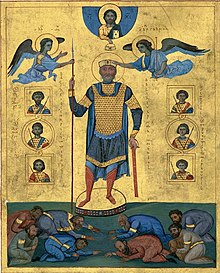 After 16 years ruling alongside his father, step-father and uncle,
  Samuel knew that the Roman army would have to invade the country through a series of mountain passes, and so took precautions to bar them. The Bulgarians built ditches along the frontier and fortified many of the valleys and passes with walls and towers, especially the pass of Kleidion on the Struma River which Basil would need to pass through to reach the heart of Bulgaria. Samuel heavily fortified the northern slopes of the Belasitsa mountain to the south and east of Strumitsa Castle. The Bulgarians disposed a strong guard to keep the pass safe. In addition, the Bulgarian ruler chose Strumitsa for his defensive base — it was located on the road from Thessaloniki leading to Thrace to the east and Ohrid to the west. The rugged terrain to the south was dotted with earthworks and walls guarded by strong Bulgarian units.
 Basil completely routed the Bulgarian army in the
 Basil II sent an envoy to Koppány. Both Basil and Koppány knew that with German support behind Stephen, Koppány would have no chance of capturing the throne for himself, unless of course he also had a foreign backer. Basil promised Roman support. He pledged a large force of Roman cataphracts, pikemen and archers to help with the effort and formal recognition of his claim to the throne. In return Basil demanded that Hungary convert to Orthodox Christianity and join the Empire as a protectorate. Koppány did not relish the idea of losing the sovereignty of his people, but ruler of a puppet state was infinitely better then the losing claimant to a throne facing execution and quartering. He agreed to Basil's offer.


Comment