
 Tweet
Tweet
These are the tales of the world of Terra, twelfth of its number. In these halls and on these scrolls are spoken and written the actions of ordinary people, Kings, Cities, Nations and Empires, throughout the History of the World!
On this world arose the Nine tribes. The Inca, Mali and Dutch, Great Traders and Masters of the Merchant Halls. The French and the Americans, whose Leaders are Noble and Inspiring, bringing forth the good in men. The Ottoman Turks and the Carpathians, of great Imperial ambition. And Mongolia and Russia, Soldiers and Conquerors. These Nine Tribes are borne on this world, and will vie for dominance over it.
Mali (Mansa Musa) Financial. Spiritual
Holland (Willem van Oranje) Financial. Creative
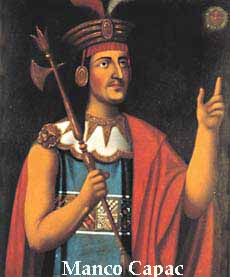
Inca (Huayna Capac) Financial. Industrious
France (Napoleon) Charismatic. Organized
America (Washington) Charismatic. Expansive
Carpathia (Charlemagne) Imperialistic. Protective
Ottoman (Suleiman) Imperialistic. Philosophical
Mongolia (Kublai Khan) Aggressive. Creative
Russia (Stalin) Aggressive. Industrious
Financial - 3 (Mali, Netherlands, Inca)
Aggressive - 2 (Mongols, Russia)
Imperialistic - 2 (Carpathia, Ottomans)
Creative - 2 (Netherlands, Mongols)
Industrious - 2 (Inca, Russia)
Charismatic - 2 (France, America)
Spiritual - 1 (Mali)
Organized - 1 (France)
Expansive - 1 (America)
Protective - 1 (Carpathia)
Philosophical - 1 (Ottomans)
But as the Prophecy speaks, one day the great wolf will devour the sun and all will be bleak and chaos will reign on Terra. The gods will fight alongside men against the hordes of darkness and all will perish at last. This is the Doomsday of prophecy. Ragnarok!
On this world arose the Nine tribes. The Inca, Mali and Dutch, Great Traders and Masters of the Merchant Halls. The French and the Americans, whose Leaders are Noble and Inspiring, bringing forth the good in men. The Ottoman Turks and the Carpathians, of great Imperial ambition. And Mongolia and Russia, Soldiers and Conquerors. These Nine Tribes are borne on this world, and will vie for dominance over it.
Mali (Mansa Musa) Financial. Spiritual
Holland (Willem van Oranje) Financial. Creative
Inca (Huayna Capac) Financial. Industrious
France (Napoleon) Charismatic. Organized
America (Washington) Charismatic. Expansive
Carpathia (Charlemagne) Imperialistic. Protective
Ottoman (Suleiman) Imperialistic. Philosophical
Mongolia (Kublai Khan) Aggressive. Creative
Russia (Stalin) Aggressive. Industrious
Financial - 3 (Mali, Netherlands, Inca)
Aggressive - 2 (Mongols, Russia)
Imperialistic - 2 (Carpathia, Ottomans)
Creative - 2 (Netherlands, Mongols)
Industrious - 2 (Inca, Russia)
Charismatic - 2 (France, America)
Spiritual - 1 (Mali)
Organized - 1 (France)
Expansive - 1 (America)
Protective - 1 (Carpathia)
Philosophical - 1 (Ottomans)
But as the Prophecy speaks, one day the great wolf will devour the sun and all will be bleak and chaos will reign on Terra. The gods will fight alongside men against the hordes of darkness and all will perish at last. This is the Doomsday of prophecy. Ragnarok!
 In the begining the tribes were separate and all spoke different languages. Despite this, peace prevailed as the tribes would hold great feasts in honor of the mother goddess and her benevolence for her people; the flora bore great quantities of fruit, and the fauna provided an endless supply of meat. For centuries things went along this way and things went well. This prosperty begat increase in the tribal numbers, however this was not to be equal and the food supply became strained over time. Of these tribes the Yorkees hadd the most warriors, were the heartiest of people, and outlived the others. The Yorkees had, for years, been the protectors of the tribal plains, in exchange for this the smaller and more shortlived of the tribes, the Yankees, provided food to the Yorkees in exchange for protection against barbarians and animals.
 thus the validity of this myth has always been challenged by contemporary archeologists. The lack of proof of an ancient city of York has been debated for at least two centuries as a hot-button issue due to the feelings of patriotism and in many ways religious belief that hinder real scientific research. The fact that many in this country have taken the term "Yorkee or Yorker" to be used to describe racial supremists also lends difficulties to a true and open discussion on this issue. In general though, the tale has always been thought of as a myth and the debate hasn't been over its authenticity, but its basis. If one looks at it from a literary perspective, its easy to determine that the story is imaginative; the fact that the princess in this case has the name 'Liberty' which is a word used in current American to mean freedom of action implies that this was more a fable than an historical account. The very nature of the 'Yankee' (or ancient American) population, which was one of a humble and diminutive farming race, lends credence to the argument that this was an invented story. Others, however, point out that there are many coincidences stacked against the argument that this was a simple patriotic tale. they point out that the city of Richmond must have gained its name from the fabled Chieftan Richard the Yankee, others point out that the name Virginia (the first recognized American kingdom) refers to the virginity taken from Liberty by George of York. The name of New York, which has no obvious or apparent 'old' predecessor is also used to support this theory, however many say that the name New York itself was created simply based on this tale.
  The best evidence supporters can muster, however, is the preponderance of "fertility statues" found in the region surrounding modern-day Washington. These statues have always been assumed to be fertility statues, but the ancient mythos of the Americans seems to have no strong ties to a fertility goddess, and the only renowned pregnant woman in American mythology is Liberty herself, pregnant with the half Yorkish half Yankee son of George of York himself. It is going to be difficult to find the ancient York for many reasons, the biggest of them though is that there is no indication in the tale or any of its variations as to where the Yankees came from, or where York could have been other than the constant mention of 'the plain' or 'the plains,' implying that York existed in some flat area which lacked trees...


Comment