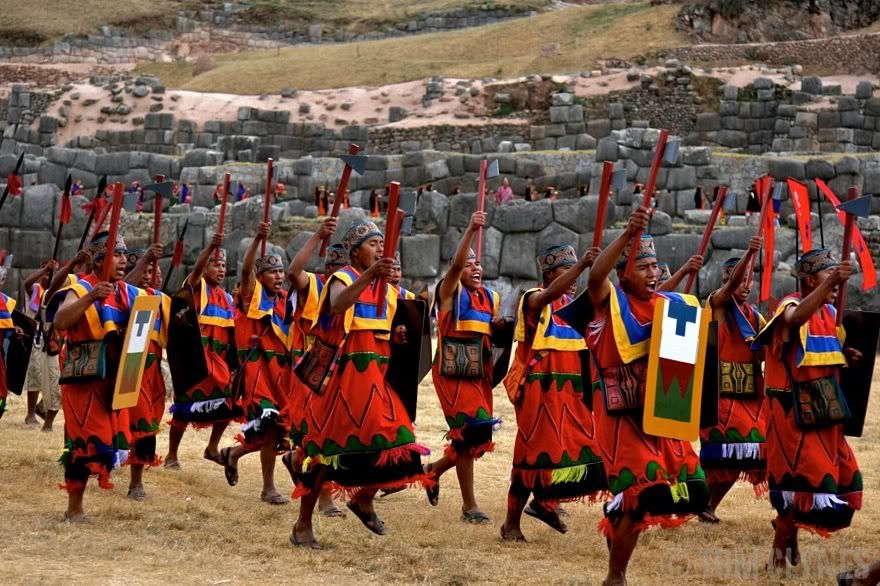
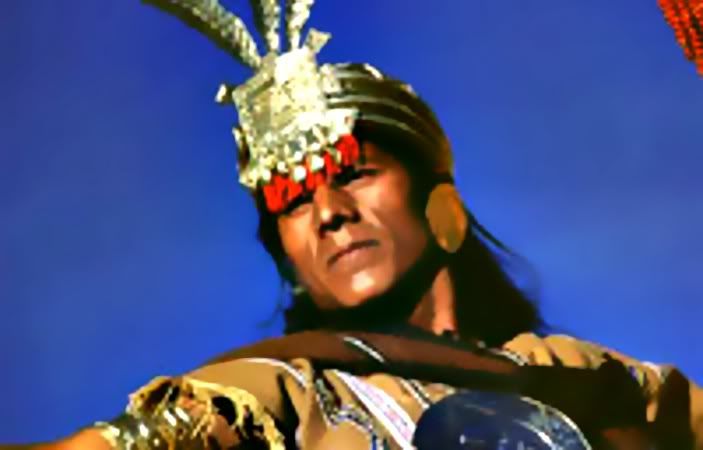
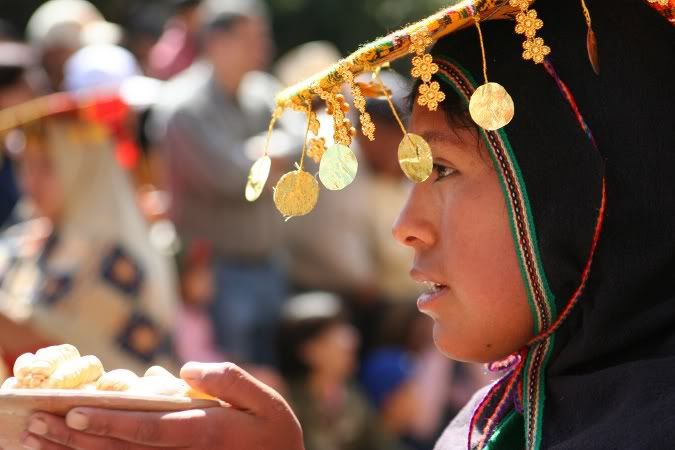
Viceroy Charles Cornwallis had come down to Miami, after hearing about the arrival of an envoy from the South, from the Inca. Upon arrival, he was brought to one of the local longhouses, where the man was brought before him. He looked at the man, and asked him: "Pray tell me sir, what can I do for you?"
The Incan man spoke, but it was in one of these awful native grunting languages. Cornwallis called for one of the American natives, thinking perhaps he might be able to decipher these grunts. However, no real progress was made. Cornwallis leaned over to one of his native slaves and said: "I find this immensely tedious. Please, when, or should I say, if, you find out what this man wants, then send an envoy and let me know what it is. When you are done with him, give him some furs and assorted trinkets and whatnot, and send him on his way."
He got up, saluted the Incan man, and walked out of the longhouse.


In the aftermath of the brutal cultural shock of meeting Europeans, the Inca had begun to (relative to their past) radically adjust their own sense of self, communal self, and expectations. Although for many in the older parts of the empire, this simply meant a more "refined" and "European" flair to traditional life, the newer communities in direct contact with the English (the Guacana and Tupaca) saw their societies grow yet further apart from the west coast. For the Guacana, centuries of economic development and business innovations fed the intellectual and professional lives of a growing population of entrepreneurs and artisans.
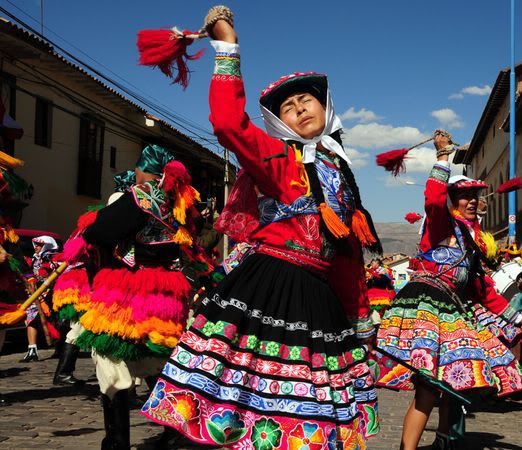
For the Tupaca and their fellow men, European intellectual and social attitudes were eagerly devoured by a very rapidly growing community of specialists and self-proclaimed "rationalists". The "Newcoasters", as they were called by the "Oldcoasters" (the Mancha, Talcha, and Capaca), were showing the beginning of a truly new approach to all affairs of human life. They embraced the far more liberal and rational ideologies than those of their Capaca and Mancha roots, for which a central argument was "because we say so" (the "we" typically being the landowners and high merchants).
Fortunately, this did not cause permanent harm to the empire, and indeed it emerged on the other side much stronger. The central government returned with far increased centralization and efficiency in Capaco, and, unfortunately, during the dark period the loss of central authority only entrenched the class system more fully. This proved beneficial in a way, as the act of patronage was started among the nobles in lieu of government input in the arts and sciences. This would carry over into the Third Period of the Inca, producing many artistic, scientific, and religious communities across the land.
Out of the darkness, the Inca Empire began its Third Period. For centuries after, the Empire would experience previously unknown rates of growth and technological advancement. Intercontinental trade would finally begin, and the Inca would develop into a nascient global player, finally freed from their dark, wet, unknown and largely ignored cage on the hidden side of a distant continent. Now, they would be a part of the great struggles and triumphs of the whole, no more a distant soloist plucking silently in some unseen corner.


John and Arthur both raised armies from their supporters and battles raged across the land. Often mere skirmishes, there were occasionally large battles that claimed many lives. With near anarchy in the motherland, the colonies were left to fend for themselves. Viceroy Cornwallis maintained his rule over the Americans and continued his mission to civilize the savages. Governors William Bradford and Walter Raleigh continued to rule their respective colonies in South America. They organized the best they could to defend their people against native raids and the ever more menacing Inca. With no royal authority back in England the colonies relied on their own hardy independence to weather the storm.
difference to the barons who had supported him. Thanks in part to the tales coming out of Sherwood Forest the succession crisis had become a full blown popular uprising. The barons became emboldened in their challenge to John. They gained the support of King Alexander II of Scotland, and together marched an army on London itself. The city, supporting their cause, opened the city gates to let them in. There, the barons swore fealty to King John on the condition that he agree to a Magna Carta limiting his power. With their armies in the city, he had no choice but to agree to their demands. Slavery was abolished throughout the British Isles and the Magna Carta replaced the barbaric legal code of King John with a more formal system of vassalage to determine the relationships between the crown and the lords. 
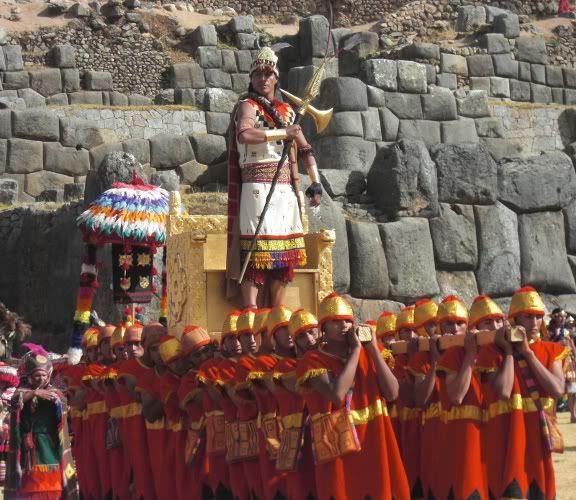
The Capaca tend to be less compromising yet just as disinterested in conflict. Seemingly a paradox, they are able to pull this off due to their clear upper hand in the affairs they choose to take part in. They are less expansionist in their influence, choosing to stick to what they know, each family and individual man fairly insular and uninterested in far-off affairs in places with clearly established lines. In the past, the Capaca led major expeditions and settlement operations, but since such efforts have fallen out of favor, perhaps due to the limited opportunities now available. Generally, other tribes don't mess with Capaca territory, and the Capaca do likewise. The Capaca are very conservative in general, and aggressive when faced with the liberalizing or otherwise conflicting interests of the "New Lands" (those presently east of the Chupat). Their dress tends to be less pronounced for commoners and peasants, and they usually wear the distinctive hats depicted here. The elites, however, are the most extravagantly (and ostentatiously) dressed men of the empire, adorning themselves in gold, feathers, and vibrant colors. The typical Capaca are coastal and river plains dwellers, and their abodes are generally adobe and clay based.
The Talcha are a more dynamic people than the Capaca. Although the Immigrant armies in the early classical times marched on and nearly sacked Capaco, the other tribes have not seen a quarter of the bloodshed that the Talcha have. Having for almost a generation lost their central city, and having had other cities razed and destroyed near the end of the Immigrant Wars, and further serving as the Empire's gateway to the rest of the Western landmass, not to mention sharing borders with the cold, uncooperative, and perpetually mysterious Aztec (whom they have a high amount of distrust and animosity for, a sort of racism, based on the unfounded feeling among many that the Aztec were behind that classical invasion), the Talcha have become preoccupied with security and have a severely "Realistic" world view. That they are also the center for Inca modern weapon production due to their iron mines makes their militarism almost unavoidable. They do not tolerate much straying from doctrine in matters of politics, but they do operate on a fairly meritocratic policy when it comes to their affairs, worried that the corruption and nepotism of their classical ancestors was the primary reason for the severe mistakes made in the Immigrant Wars that cost them so dearly. Culturally, the Talcha are very similar to the Capaca. Commoners wear similar dress and live in similar homes, while the elites of the society tend to wear the distinctive, simple white-based tunics with red or black detailing.
Also referred to as a number of large families-tribes, the Guacana are a fairly loose collection of lesser tribes and cultures that arose independently of the Inca during ancient times. They were integrated into Inca civilization long ago, when the Kingdom finally transformed itself into an empire and began conquering the "alien" Dark Territories. To speak in generalities about the Guacana is to engage in fantasy. What can be said in general is that they are more egalitarian, more commercially-focused, and more individualistic and dynamic than any other tribe in the Empire. Despite entering the Empire in the poorest of states (basic hunter-gatherers and junglemen), they have adapted well to organized life, and now are the center of the Empire's economic growth. Their fractious nature prevents them from holding true power in the central government or greater "body social", something other powers have used to further divide them (although distrust of "local foreign" influence remains high). In general, the Guacana keep to themselves, sending their taxes westward, and propagating their "scientific" breakthroughs throughout the lands. The Guacana are not, however, known for the compassion for other "junglemen" of the Tamazono, whom they have perpetually been at war with since antiquity. Typical dress varies highly, although use of feathers and limited covering is the norm. Dwellings are made of wood. The Guacana are a river people, living through the many branches of the Tamazono and similar rivers of the Dark Territories.
n the year of our Lord 1060, a monastery was built in the hills near the Russian town of Sochi. It was made by appointment of our most pious and enlighted Queen Catherine of Rus for the glory of our God.

Furious, the people of Caczcoyna city have been protesting and rioting over the orders and demands of the central government, and of their regionate government's complicity in the affairs. Some background may be necessary to understand these events. Some time back, the central government had deemed it necessary to force the Tupaca family to create large settling parties the English were demanding at the time. Although the people of Caczcoyna, by now distinct from their Mancha ancestry, and loosely calling themselves Tupancha, were neutral towards the English, fulfilling this came at great cost, and in general they were less than happy to be taking orders from distant Capaco. The Capaco government, however, had little choice, as West Coast (by this time they had adopted European geographical terms) production centers were completely hostile towards sending their workers off to the English, and besides all were busy in working on the military buildup at the time. Hazpac Caczcoyna, however, offered much growth, and so was deemed a perfect solution.
Once completed, the settling party left to be given to the English, but diplomatic arguments and discussions prevented their immediate departure from Inca lands. Lost in a limbo between the two cities, the people took to the fertile yet still uninhabited hills of the middle eastern Chupat Mountains, and awaited the declaration of their fate by the "local foreign" Emperor in Capaco. This increasingly frustrated the Tupancha, and became a very visible and ongoing issue in local politics. In addition, the central government had also had to move its local garrison to conquer the barbarian city-state of the Kassites to the southwest, heavily dissipating what leverage the central government had on local affairs.
Once the settlers had left, the hazpac returned to its own explosive growth, and this influx of youth and vitality (and a good deal of hormones) mixed with the prevailing issues to produce a highly unstable alchemical mixture. Shortly, the city was ablaze, the governing buildings lit up as riots and protests racked the metropolis. Long forced into manual labor and food production by Capaco, the intellectuals that were once the backbone of Tupancha society came to the fore and led a successful revolt, overthrowing the local government and forcing the Tupaca family to make a strong about-face to save their influential role in local (and increasingly, regional) affairs. The revolt was fortunately fairly bloodless, the government having few troops to muster to combat it and little resolve, and resolution was swift.
The results were an increasing amount of sovereignty for the hazpac, and the "wild south" in general, now yet further distanced from the central government, which still at this time was too weak to force any real control. Although the government would soon come to control the Kassites, they had almost fully lost both Hazpac Caczcoyna and Hazpac Cuzaca in the process. To add further frustration, the "lost settlers" were returned to the control of the Tupaca family, which immediately decided to settle them to the west, in the mountains, a move that would heavily press into traditional Mancha territory, and mark a turning point in the Mancha/Capaca-Tupaca/Tupancha saga.
This would further disrupt the already disrupted relations between Inca and English, hurt heavily by the "letter of Kingly demands" circled by Emperor Talchota earlier, as fulfilling such demands would now prove impossible, no hazpac being willing to fulfill them of its own accord, the central government being unmoved enough to force the issue with its localities, and the Emperor (of the third Talcha reign) being quite inimical towards the English, perhaps solely due to his family's strong dislike of the English-friendly Manco.
The Assimilation of the Kassites
Arctic winds ripped through the plains, freezing and crushing the short shrubland grasses under their weight. Although the humid heated winds of the north have an oppression of their own, it is a sort of stifling silence of somnolence, a tropic torpidity, but nothing so sheer and slicing as southerlies. No, these winds fray the frigid shells of men, violently gutted already by the glacial gales. They are an assault of thermal death, each gust a volley of the icy artillery of an inimical nature. It is an assault that works from the inside primarily while it slowly chips and chars the outside with its frozen fire. It sucks out the souls of men, leaving them thin, shivering masses of quivering muscle and racked bones, whose only desires, hopes, thoughts, and feelings are of one kind: the demand for warmth and substance. They no longer know either, themselves now insubstantive: wraiths wandering worn and wretched wastelands of some damned limbo of the southern plains.
Chutzco had more than the sole desire of his men, and for this he was general. His second desire, other than warmth, was the conquest of the Kassites, a lost coastal people who the Emperor, in his warm, comfortable palace 1,000 patchas away had decided should be found again, brought into the Inca fold. The Emperor, of course, wouldn't dare visit this stretch of blurred gray, wouldn't bother to personally make his presence known to the 5,000 inhabitants of this prehistoric settlement. No, he would send the general instead, and his men as well.
"So we followed them inwards, up and down ravines and draws and ridges. We followed those ancient Tupaca tracks long lost to the shrubgrasses and pines and forests. We moved closer, met more of them, generally in peace. They dared not attack us, and we had no need for unnecessary blood. They brought us food, shared their hunts, their berries and vegetables. They have continued to feed us now for so many years, unaware of our intents. Here we have holed up in some rocky outcrop of the southern Chupat, where the mountains finally break into cracked hills and deep valleys, where the sea dies down and all is left is salt in the air, a desolate and dry land.
the cold. The New World afforded them great chances at opportunity. For an intrepid few willing to brave the malaria soaked jungles of the colonies a fortune could be made. South America was rich in cash crops that could only grow in the warm year-round growing season in South America. Great farms and plantations of corn, exotic spices and tropical fruit dotted the northern coast of English South America. These crops were all the rage back in England and made the growers very wealthy. The discovery of precious gems in the colonies further spurred trade and development.
It also started to reshape society. While some crops, such as spices and fruit could only be efficiently produced in the colonies, others could be transplanted back to England. Three American crops became quite popular back home: corn, the tomato and the potato. The most important new food was the potato, which had three major advantages over other foods for the consumer: its lower rate of spoilage, its bulk (which easily satisfied hunger), and its cheapness. Potatoes yielded from two to four times more calories per acre than grain did, and eventually came to dominate the food supply in England. Indeed, a single acre of potatoes and the milk of a single cow was enough to feed a whole Irish family a monotonous but nutritionally adequate diet for a healthy, vigorous (and desperately poor) rural population. Often even poor families grew enough extra potatoes to feed a pig that they could sell for cash.


Their fifth child, Joseph Smith, Jr. was quiet, but thoughtful. It was then that he began to experience visions. The most profound of these involved the angel Moroni who appeared to him at night and directed the young Joseph Smith Jr. to a nearby hillside. There the angel instructed him to dig. Out of the ground Smith pulled a set of golden plates enclosed in a stone box. The plates were six inches wide and eight inches long and not quite so thick as common tin. They were filled with engravings, in Ancient Egyptian characters and bound together in a volume, as the leaves of a book with three rings running through the whole. The volume was something near six inches in thickness, a part of which was sealed. The characters on the unsealed part were small, and beautifully engraved. The whole book exhibited many marks of antiquity in its construction and much skill in the art of engraving.

Bookmarks