 Tweet
Tweet
God Bless America.
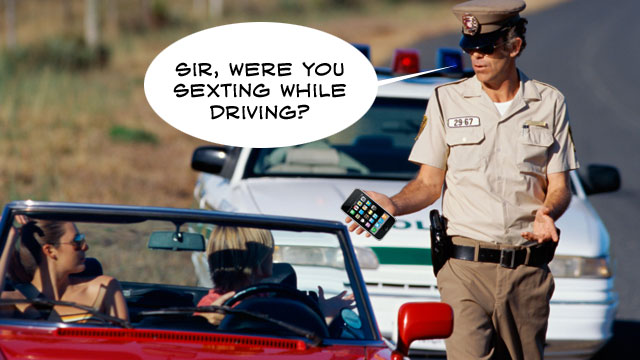
Warrantless cell phone search gets a green light in California
The contents of your cell phone can reveal a lot more about you than the naked eye can: who your friends are, what you've been saying and when, which websites you've visited, and more. There has long been debate over user privacy when it comes to various data found on a cell phone, but according to the California Supreme Court, police don't need a warrant to start digging through your phone's contents.
The ruling comes as a result of the conviction of one Gregory Diaz, who was arrested for trying to sell ecstasy to a police informant in 2007 and had his phone confiscated when he arrived at the police station. The police eventually went through Diaz's text message folder and found one that read "6 4 80." Such a message means nothing to most of us, but it was apparently enough to be used as evidence against Diaz (for those curious, it means six pills will cost $80).
Diaz had argued that the warrantless search of his phone violated his Fourth Amendment rights, but the trial court said that anything found on his person at the time of arrest was "really fair game in terms of being evidence of a crime."
In its review of the case, the Supreme Court held that the Fourth Amendment didn't apply to the text messages on Diaz's cell phone at the time of arrest. The court cited a number of previous cases wherein defendants were arrested with all manner of incriminating objects—heroin tablets hidden in a cigarette case, paint chips hidden in clothing, marijuana in the trunk of a car—which did not require a warrant to obtain. The court said that the phone was "immediately associated" with Diaz's person, and therefore the warrantless search was valid.
The decision was not unanimous, though. "The potential intrusion on informational privacy involved in a police search of a person‟s mobile phone, smartphone or handheld computer is unique among searches of an arrestee's person and effects," Justices Kathryn Mickle Werdegar and Carlos Moreno wrote in dissent.
They went on to argue that the court majority's opinion would allow police "carte blanche, with no showing of exigency, to rummage at leisure through the wealth of personal and business information that can be carried on a mobile phone or handheld computer merely because the device was taken from an arrestee's person. The majority thus sanctions a highly intrusive and unjustified type of search, one meeting neither the warrant requirement nor the reasonableness requirement of the Fourth Amendment to the United States Constitution."
The courts have gone back and forth in the past on how much privacy protection should be given to data that can be found on a citizen's cell phone. A Pennsylvania District Court ruled in 2008 that law enforcement must get a warrant before acquiring historical records of a cell phone user's physical movements. The same year, the 9th Circuit Court said that the text messages of a police officer had to meet the standards of a reasonable search before law enforcement could access them. In 2010, however, the US Supreme Court said that government employers have the right to read transcripts of employees' e-mails, IMs, texts, and other communications, and that the Fourth Amendment wouldn't protect them from a government search.
South Texas College of Law professor Adam Gershowitz argued in a 2008 paper that the proliferation of iPhone-like devices means that officers fishing through your pockets for weapons can suddenly access a plethora of sensitive documents, not to mention possible passwords. "[S]ince the Supreme Court has ruled that police have broad authority to arrest people for even trivial infractions, such as failure to wear a seat belt, the current rule gives law enforcement officers broad discretion to transform a routine traffic stop into a highly intrusive excavation of your digital life," Ars observed at the time.
Gershowtiz suggested a number of possibilities for how courts could distinguish between an appropriate cell phone search and an inappropriate one, but no such rules exist yet. In the meantime, California citizens may want to be extra careful about what gets stored on their devices, lest the police find a reason to dig up your sexy texts or communications with your private "dispensary."
The contents of your cell phone can reveal a lot more about you than the naked eye can: who your friends are, what you've been saying and when, which websites you've visited, and more. There has long been debate over user privacy when it comes to various data found on a cell phone, but according to the California Supreme Court, police don't need a warrant to start digging through your phone's contents.
The ruling comes as a result of the conviction of one Gregory Diaz, who was arrested for trying to sell ecstasy to a police informant in 2007 and had his phone confiscated when he arrived at the police station. The police eventually went through Diaz's text message folder and found one that read "6 4 80." Such a message means nothing to most of us, but it was apparently enough to be used as evidence against Diaz (for those curious, it means six pills will cost $80).
Diaz had argued that the warrantless search of his phone violated his Fourth Amendment rights, but the trial court said that anything found on his person at the time of arrest was "really fair game in terms of being evidence of a crime."
In its review of the case, the Supreme Court held that the Fourth Amendment didn't apply to the text messages on Diaz's cell phone at the time of arrest. The court cited a number of previous cases wherein defendants were arrested with all manner of incriminating objects—heroin tablets hidden in a cigarette case, paint chips hidden in clothing, marijuana in the trunk of a car—which did not require a warrant to obtain. The court said that the phone was "immediately associated" with Diaz's person, and therefore the warrantless search was valid.
The decision was not unanimous, though. "The potential intrusion on informational privacy involved in a police search of a person‟s mobile phone, smartphone or handheld computer is unique among searches of an arrestee's person and effects," Justices Kathryn Mickle Werdegar and Carlos Moreno wrote in dissent.
They went on to argue that the court majority's opinion would allow police "carte blanche, with no showing of exigency, to rummage at leisure through the wealth of personal and business information that can be carried on a mobile phone or handheld computer merely because the device was taken from an arrestee's person. The majority thus sanctions a highly intrusive and unjustified type of search, one meeting neither the warrant requirement nor the reasonableness requirement of the Fourth Amendment to the United States Constitution."
The courts have gone back and forth in the past on how much privacy protection should be given to data that can be found on a citizen's cell phone. A Pennsylvania District Court ruled in 2008 that law enforcement must get a warrant before acquiring historical records of a cell phone user's physical movements. The same year, the 9th Circuit Court said that the text messages of a police officer had to meet the standards of a reasonable search before law enforcement could access them. In 2010, however, the US Supreme Court said that government employers have the right to read transcripts of employees' e-mails, IMs, texts, and other communications, and that the Fourth Amendment wouldn't protect them from a government search.
South Texas College of Law professor Adam Gershowitz argued in a 2008 paper that the proliferation of iPhone-like devices means that officers fishing through your pockets for weapons can suddenly access a plethora of sensitive documents, not to mention possible passwords. "[S]ince the Supreme Court has ruled that police have broad authority to arrest people for even trivial infractions, such as failure to wear a seat belt, the current rule gives law enforcement officers broad discretion to transform a routine traffic stop into a highly intrusive excavation of your digital life," Ars observed at the time.
Gershowtiz suggested a number of possibilities for how courts could distinguish between an appropriate cell phone search and an inappropriate one, but no such rules exist yet. In the meantime, California citizens may want to be extra careful about what gets stored on their devices, lest the police find a reason to dig up your sexy texts or communications with your private "dispensary."


Comment